Certain affiliate web sites use pop-ups, pop-unders, IFRAMEs, JavaScript, and other methods to claim affiliate commissions on users purchases from affiliate merchants, even if users do not click on affiliates’ links to the merchants. This page documents selected affiliates using these practices and selected merchants suffering from these practices.
Overview
& Summary
Affiliate tracking systems are intended to pay commissions
to independent web sites (“affiliates”) when users click through these
sites’ links to affiliate merchants. Merchants are not intended to pay commission
when users merely visit affiliates’ sites. Instead, commission ordinarily only
becomes payable in the event that a user 1) visits an affiliate’s site, 2) clicks
through an affiliate link to a merchant, and 3) makes a purchase from that merchant.
However, some affiliates use “cookie-stuffing” methods to cause affiliate
merchants’ tracking systems to conclude that a user has clicked through a tracking
link (and to pay commissions accordingly) even if the user has not actually
clicked through any such link. If the user subsequently makes a purchase from
that merchant — immediately, or within the “return days” period specified
by the merchant’s affiliate program — the affiliate then receives a commission
on the user’s purchase.
This page presents the incentives that have allowed cookie-stuffing to continue, and captures selected examples of cookie-stuffing. See also the Affiliate Fraud Information Lookup, reporting of the number of observations Wesley Brandi and I have gathered in ongoing high-volume tests for cookie-stuffing.
Groups Affected by Cookie-Stuffing
Affiliate Networks Benefit from Cookie-Stuffing
Affiliate merchants
ordinarily pay their affiliate networks a percentage of all affiliate revenues
passing through the network. For example, Commission Junction’s public
pricing list reports that CJ charges a merchant 30% of all amounts to be paid
to affiliates. (In other words, if a merchant sells $1,000,000 of merchandise
and pays a 5% affiliate commission, then it must pay $50,000 of commission to
its affiliates. It must further pay 30% of $50,000, or $15,000, to Commission
Junction.) As a result, in the first instance, affiliate networks benefit from
cookie-stuffing. Such cookie-stuffing increases the total volume of sales flowing
through affiliate networks, and increases the affiliate commissions on which,
for example, CJ can charge a 30% fee.
Set against this short-run incentive is the long-term problem that if affiliate
networks fall greatly in value to merchants, or if affiliate networks are perceived
to facilitate fraud, then merchants may no longer be willing to pay affiliate
commissions and affiliate network fees. But in the short run, affiliate networks
benefit from more money flowing through their networks.
To date, affiliate networks have failed to aggressively
pursue, stop, and punish those affiliates using cookie-stuffing. Indeed, LinkShare
has repeatedly granted a $15,000 award to affiliates later found to be using
cookie-stuffing. In each instance LinkShare subsequently withdrew the award
after pressure from affiliates, merchants, and others. (See MediaPost coverage.) LinkShare’s repeated awards
to affiliates using cookie-stuffing reveal that this technique extends to large affiliates and to well-regarded affiliates.
That said, affiliate networks’ black-letter rules generally officially
prohibit cookie-stufing. For example, Commission Junction’s Publisher
Service Agreement states that an affiliate publisher “may earn financial
compensation … for transactions … made from such publisher’s web site …
through a click made by a visitor … through an Internet connection (link)
to a web site.” In all the examples set out below, no
such click occurred, and therefore no commission is fairly earned given the
limitations set out in the PSA.
Affiliate Merchants Suffer
from Cookie-Stuffing
Affiliate merchants suffer financially from cookie-stuffing. Cookie-stuffing
causes merchants to pay commissions that, according to program rules, they need
not pay. Cookie-stuffing also causes merchants to pay commissions to the wrong
affiliates — to affiliates who never caused an actual user click-through —
which is likely to reduce the quality and effort of affiliates participating
in the merchant’s program.
Cookie-Stuffers
Profit from Cookie-Stuffing
Cookie-stuffing apparently proves profitable
for those who do it. Suppose an affiliate ordinarily has a 10% click-through rate
from its site to its merchants. The affiliate ordinarily receives affiliate commission
only if a purchase is made by one of the 10% of users who clicks through the affiliate’s
link. In contrast, by cookie-stuffing, the affiliate can claim commissions from
any purchases made by the entire 100% of the affiliate’s visitors.
Rule-Following
Affiliates Suffer from Cookie-Stuffing
Rule-following affiliates suffer
from cookie-stuffing. For one, rule-following affiliates’ cookies may be overwritten
by cookie-stuffers. Suppose a user clicks to affiliate site A, a rule-follower
not using cookie-stuffing, and clicks through A’s link to a given merchant. The
next day, the user visits affiliate site B, a rule-breaker using cookie-stuffing
as to the same merchant site. Using cookie-stuffing, site B sets an affiliate
tracking cookie that overwrites A’s cookie. If the user subsequently makes a purchase
from the merchant, the affiliate commission will be paid to B, not A.
Rule-following affiliates also suffer from cookie-stuffing because cookie-stuffing encourages merchants to cut their commission rates. Without cookie-stuffing, merchants would be paying commissions on fewer orders. At least some merchants would likely then choose to increase commission paid on each order.
Specific Examples of Cookie-Stuffing
This section links to my research and testing, showing cookie-stuffing targeting
major affiliate merchants. In initial reporting, I have focused on cookie-stuffing
targeting merchants CJ designates as “featured”
and on merchants who participate in discussion fora on ABestWeb.
The table below gives “clear-cut” examples of cookie-stuffing —
affiliate HTML code that clearly shows intention to set affiliate cookies without
a user clicking through any affiliate link.
| Merchant | Cookie-Stuffing Affiliate | Date | Notes |
| Amazon (an independent merchant) | Avxf (qufrho-20) | 10/6/08 | Broken IMG loaded within forum page. Details and video. |
| Amazon (an independent merchant) | consumernow.com (jumpondealscom) | 11/6/04 | Obfuscation via a redirect. Details and video. |
| Amazon (an independent merchant) | Bannertracker-script | 2/27/12 | JavaScript invisibly inserted into multiple independent sites via web server hacking. 200+ affiliate IDs in use. Details. |
| Amazon (an independent merchant) | Imgwithsmiles | 5/2/12 | Flash-based stuffing syndicated through Google AdSense display ad network. 49+ affiliate IDs in use. Details. |
| Argos (a CJ Advertiser) | Eshop600 (3910892) | 1/30/12 | Encoded JavaScript and invisible IMG. 26 cookies stuffed at once. Details. |
| Barnes & Noble (a CJ Featured BFAST Advertiser) | dailyedeals.com (BFAST 26682568) | 11/4/04 | Misleading JavaScript comments. Details
and video. |
| Buy.com (a CJ Advertiser) | Couponcodesmall (2705091) | 10/5/08 | Invisible IFRAME. Details and video. |
| Cooking.com (a LS Selected Merchant) | dailyedeals.com (FZOkC4w7rNM) | 11/6/04 | Misleading JavaScript comments. Details
and video. |
| Crucial.com (a CJ Featured Vantage Advertiser) | dailyedeals.com (340672) | 11/2/04 | Details and video. |
| Dell (a LS Selected Merchant) | jumpondeals.com (HAHu6s1Hzp4) | 11/5/04 | Obfuscation via a redirect. Details and video. |
| Dentalplans (an ABestWeb CJ merchant) | consumernow.com (517038) | 11/6/04 | Obfuscation via a redirect. Details
and video. |
| Drugstore.com (a LS Selected Merchant) | dailyedeals.com (FZOkC4w7rNM) | 11/6/04 | Misleading JavaScript comments. Details
and video. |
| Eastwood (an ABestWeb CJ merchant) | aboutdiscounts.com (1311826) | 11/4/04 | SCRIPT after /HTML. Details and video. |
| eVitamins (an ABestWeb CJ merchant) | couponvine.com (465743) | 11/4/04 | Two-step JavaScript. Details and video. |
| Folica (a CJ merchant) | ahugedeal.us (568228) | 11/8/04 | Details and video. |
| Folica (a CJ merchant) | ahugedeal.com (568228) | 10/25/05 | Still occurring with same affiliate ID, 11+ months after prior reporting.
Obfuscation via a redirect. Details and video.
|
| FunToCollect (an ABestWeb CJ merchant) | specialoffers.com (306244) | 11/6/04 | Obfuscation via a redirect. Details
and video. |
| Globat (a CJ merchant) | coupon-monkey.com (1446676) | 11/8/04 | /CLICK loaded in IMG tag. Details and video.
Note: Coupon-monkey claims cookie-stuffing was accidental. Details. |
| HostGator (an independent merchant) | Avxf (dsplcmnt01) | 10/6/08 | Broken IMG loaded within forum page. Details and video. |
| HSN (a CJ Featured BFAST Advertiser) | coupons-coupon-codes.com (BFAST 38772000) | 11/4/04 | Obfuscation via external JavaScript and redirect. Details
and video. |
| iPowerWeb (a CJ BFAST merchant) | bids2buy.com (1525933) | 11/6/04 | Details and video. |
| Irv’s Luggage (an ABestWeb CJ merchant) | edealinfo.com (600263) | 11/4/04 | IFRAME. Details and video. |
| JCWhitney (an ABestWeb CJ merchant) | consumernow.com (517038) | 11/6/04 | Obfuscation via a redirect. Details and
video. |
| LaptopsforLess (an ABestWeb CJ merchant) | find-coupon.com (1525933) | 11/4/04 | Popup. Details and video. |
| Match.com (a CJ Featured Vantage Advertiser) | asmartcoupon.com (1515738) | 11/4/04 | /CLICK loaded in IMG tags. Details and video. |
| MLB.COM (a CJ Featured Vantage Advertiser) | edealinfo.com (600263) | 11/4/04 | IFRAME. Details and video. |
| Napster (a CJ front-page Featured Advertiser) | coupons-online-coupon.com (1167113) | 11/4/04 | Popup. Details and video. |
| Netzero (a CJ Featured Vantage Advertiser) | consumernow.com (517038) | 11/4/04 | Obfuscation via a redirect. Details and
video. |
| Orbitz (a LS Selected merchant) | thewinnersclub.net (HAHu6s1Hzp4) | 11/8/04 | Obfuscation via a redirect. Details and video. |
| Oreck (an ABestWeb CJ merchant) | 1couponstop.com (517038) | 11/4/04 | Obfuscation via a redirect. Details and video. |
| Overstock.com (an ABestWeb LS merchant) | dailyedeals.com (FZOkC4w7rNM) | 11/5/04 | Misleading JavaScript comments. Details
and video. |
| PetcareCentral (an ABestWeb CJ merchant) | aboutdiscounts.com (276460) | 11/4/04 | SCRIPT after /HTML. Details and video. |
| Priceline (a CJ BFAST merchant) | findsavings.com (40001021) | 11/7/04 | Details and video. |
| RapidSatellite (an ABestWeb CJ merchant) | smartqpon.com (979227) | 11/4/04 | Details and video. Details and video. |
| Relaxtheback.com (a LS Selected Merchant) | office-coupons-online.com (g/KOq4zlIIk) | 11/6/04 | Details and video. |
| Shoes.com (an ABestWeb CJ merchant) | ultimatecoupons.com / webbuyingguide.com (1417434) | 11/4/04 | Cookie tracking of popunder triggering. Details
and video. |
| ShopNBC (a CJ Featured BFAST Advertiser) | ultimatecoupons.com / webbuyingguide.com (BFAST 38954339) | 11/4/04 | IFRAME. Details and video. |
| SkinStore.com (a CJ BFAST merchant) | discount-coupons-online.com (568228) | 11/6/04 | Details and video. |
| Spafinder.com (a LS Merchant) | ultimatecoupons.com / webbuyingguide.com (OEu024dtHXs) | 11/6/04 | JavaScript URL variable. Details and video. |
| Toshiba (a CJ front-page Featured Advertiser) | consumernow.com (517038) | 11/4/04 | Obfuscation via a redirect. Details and
video. |
| TigerDirect.com (an ABestWeb CJ BFAST merchant) | findsavings.com (39104038) | 11/5/04 | Details and video. |
| Travelocity (a CJ BFAST Selected merchant) | xpcoupons.com (40031581) | 11/8/04 | IFRAME. Placed after /BODY. Details
and video. |
The table below gives additional examples of cookie-stuffing.
In these examples, I see insufficient basis to determine whether the affiliate
intended to set affiliate cookies without a user clicking through any
affiliate link. Nonetheless, that is the net effect of the examples linked below.
| Merchant | Cookie-Stuffing Affiliate | Date | Notes |
| DentalPlans (an ABestWeb CJ merchant) | savings-center.com | 11/4/04 | FRAME. Details and video. |
| FunToCollect (an ABestWeb CJ merchant) | goodbazaar.com | 11/4/04 | FRAME with META tags. Details and video. |
| JCWhitney (an ABestWeb CJ merchant) | a2zrewards.com | 11/4/04 | FRAME with META tags. Details and video. |
| Travelocity (a CJ BFAST merchant) | couponmountain.com | 11/8/04 | Redirect with META tags, broken BACK button. Details
and video. |
Because LinkShare’s compliance and quality problems are already well-known (e.g. as described above, as to LinkShare’s repeated Titanium Award missteps), the listing above focuses primarily on Commission Junction merchants.
Last Updated: May 8, 2012
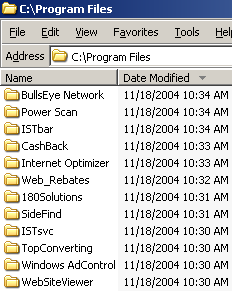 Malware installed through a single security exploit