Delaying Payment to Deter Online Advertising Fraud

In a new article, I introduce an alternative method of fraud prevention for certain online advertising systems. By delaying payments, a merchant or network differentially harms bad affiliates (who rightly worry they may get caught) without unduly harming good affiliates (who know they’ll get paid, and who receive a bonus in compensation for the delay). With a suitable delay, a merchant or network can deter many bad affiliates while retaining the good.

My working draft:

Optimal Deterrence when Judgment-Proof Agents are Paid in Arrears – with an Application to Online Advertising Fraud

Details on my approach, including initial data on merchants’ and networks’ current payment terms.

(update: published as Edelman, Benjamin. “Deterring Online Advertising Fraud Through Optimal Payment in Arrears.” Financial Cryptography and Data Security: Proceedings of the International Conference (September 2009). (Springer-Verlag Lecture Notes in Computer Science.))

Spyware Still Cheating Merchants and Legitimate Affiliates updated May 22, 2007

Spyware vendors are trying to clean up their images. For example, Zango settled a FTC investigation, then last week sued PC Tools for detecting and removing Zango software. Meanwhile, Integrated Search Technologies (makers of a variety of software previously widely installed without consent) introduced a new “Vomba” client that even received “provisional” TRUSTe Trusted Download certification.

But these programs’ core designs are unchanged: They still track user behavior, still send browsing to their central servers, and still show pop-up ads — behaviors users rightly disfavor due to serious effects on privacy and productivity.

Putting aside users’ well-known dislike for pop-ups, these programs also continue to interfere with standard online advertising systems. In particular, these programs show ads that overcharge affiliate merchants — especially by claiming commission on organic traffic merchants would have received anyway. This article presents six specific examples, followed by analysis and strategies for enforcement.

The Self-Targeting Scam and an Initial Example: Zango, Roundads, and Performics Claiming Commissions on Blockbuster’s Organic Traffic

Putting spyware vendors’ practices in the best possible light, they perform a comparative advertising function — offering a competitor when a user browses a merchant’s site. But suppose a spyware vendor instead shows a “competitor” that is actually just a commission-earning link to the very site the user had specifically requested. Then, if the user buys from that merchant (through either the original window or the new pop-up, in general), the merchant has to pay a commission to the spyware vendor (or its advertiser or affiliate).

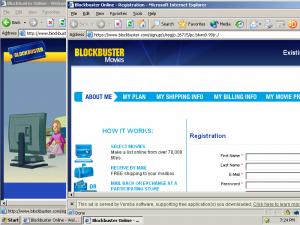
Zango, Roundads, Performics Targeting Blockbuster Zango, Roundads, Performics Targeting Blockbuster

For concreteness, consider the events shown in the screenshot at right and in video. On May 13, my automated testing system browsed Blockbuster. Observing the requested traffic to Blockbuster, Zango opened a popup sending traffic to Roundads.com. Roundads redirected to Performics and then back to Blockbuster. To a typical user, this pop-up is easy to ignore — just a second copy of the Blockbuster site, which users had requested in the first place. But the pop-up has serious cost implications for Blockbuster: If the user signs up with Blockbuster, through either window, then Blockbuster concludes it should pay a $18 commission to Roundads via Performics. That’s a sham: Were it not for Zango’s intervention, Blockbuster could have kept the entirety of the user’s subscription fee, without paying any commission at all.

Zango’s activity here doesn’t even meet the definition of advertising (“attracting public attention to a product or business”). After all, the user was already at Blockbuster — and hence can’t be said to have been “attract[ed]” to that site by Zango’s action.

Unless Blockbuster installs Zango’s software and runs its own tests, Blockbuster is likely to conclude (mistakenly) that Roundads has provided a bona fide lead to a new customer. Indeed, since Blockbuster’s preexisting web site visitors are likely to “convert” to buyers at a high rate (compared to visitors who only arrive thanks to advertising), Blockbuster’s advertising metrics (and Performics’ tracking measurements) are likely to consider Roundads an unusually high-quality affiliate thanks to Roundads’ likely high conversion rate. Blockbuster might even pay Roundads a bonus — when in fact this Roundads traffic is worthless.

URL log of the traffic at issue:

http://tvf.zango.com/showme.aspx?…CD=www.blockbuster.com…
http://ads.roundads.com/ads/clickcash.aspx?keyword=.blockbuster.com
http://clickserve.cc-dt.com/link/tplclick?lid=41000000005307215&pubid=…
https://www.blockbuster.com/signup/rp/regPlan/p.25216/c.firstMonth999F…

For more on these self-targeting pop-ups, targeting merchants’ sites with their own affiliate links, see my earlier The Effect of 180solutions on Affiliate Commissions and Merchants (2004).

On these facts, Blockbuster might reasonably blame Roundads — the entity that purchased the traffic from Zango and put in motion the self-targeting scheme. Investigating Roundads’ identity, Blockbuster will notice Roundads.com’s footer — which states that Roundads is one and the same as Thermo Media / Affiliate Fuel, which credit reporting agency Experian acquired in April 2005. (Update, May 22: Joey Flores, Director of Operations for Affiliate Fuel, wrote to me to report that Roundads has no affiliation with Affiliate Fuel, Thermo Media, or Experian. Joey suggests that Roundads “‘borrowed’ from [Thermo Media’s] site design … and their designers got a little copy happy, including [copying] our copyright information on[to] their site.”)

Blockbuster might also blame Performics. Performics specifically touts its affiliate network as offering “cost-effective” advertising. But in this example, the cost was a total waste, yielding no benefit whatsoever. Performics further promises “quality affiliates” — an important benefit to merchants who might not otherwise know which affiliates to accept. But in this instance, by all indications Performics failed to protect Blockbuster from Roundads’ bad actions and improper charges.

Finally, Blockbuster might blame Zango — whose pop-up generating software made it remarkably easy for Roundads to target Blockbuster’s organic traffic.

Example 2: Vomba, Ccg360, Lynxtrack (Hydra Network), Adrevolver (Blue Lithium) Claiming Commissions on Blockbuster’s Organic Traffic

Vomba, Ccg360, Lynxtrack (Hydra), Adrevolver (BlueLithium) Overcharging Blockbuster Vomba, Ccg360, Lynxtrack (Hydra), Adrevolver (BlueLithium)

Blockbuster’s online advertising is widespread, and the preceding example is but one of many schemes that charge Blockbuster commission it ought not have to pay. This section shows another.

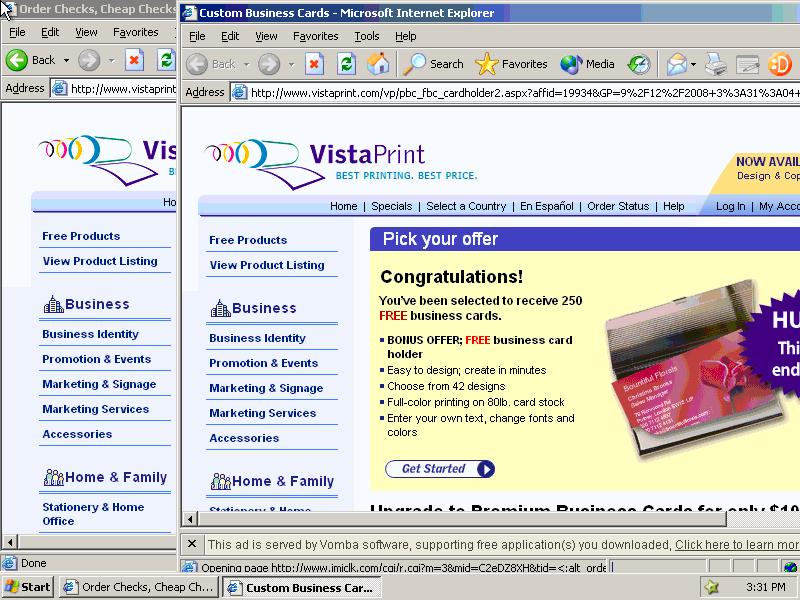
In the screenshot shown at right, reflecting testing of May 11, my automated testing system requested the Blockbuster site. Vomba spyware observed that I was at Blockbuster, and sent traffic to Ccg360 (purportedly Nelson Cheung of Markham, Canada). Ccg360 redirected to Lynxtrack.com (Hydra Network of Beverly Hills, California), which redirected to Adrevolver (BlueLithium of San Jose, California) and finally back to Blockbuster.

As in the prior example, the net effect was to claim commission on Blockbuster’s organic traffic. If the user signs up with Blockbuster, Blockbuster will pay a commission to the sequence of companies that forwarded the Vomba-originating traffic. But had those parties not intervened with that pop-up, Blockbuster would still have closed the sale — without incurring a commission expense. So as in the prior example, this is self-targeting, charging Blockbuster a commission without providing any bona fide value in return.

URL log of the traffic at issue:

http://services.vombanetwork.com/vomba/popup.php
http://blockbuster.med.ccg360.com
http://www.lynxtrack.com/afclick.php?o=3318&b=zm00z1tf&p=11566&l=1&s=med
http://track.adrevolver.com/service.php/16520/1893/11566
https://www.blockbuster.com/signup/s/reg/p.26715/pc.blwm9.99/r./

Example 3: Vomba and LinkShare Claiming Commissions on Netflix’s Organic Traffic

Vomba and LinkShare Claiming Commission on Netflix's Organic Traffic Vomba, LinkShare Claiming Commission on Organic Traffic

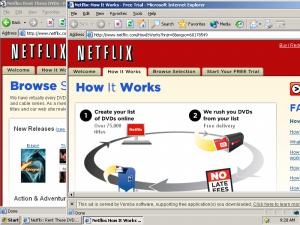
Netflix has repeatedly promised to sever ties with spyware vendors, even claiming that incidents that I and others observed were “unique and random.” But through its LinkShare affiliate program, Netflix continues to get ripped off by spyware — needlessly paying commissions to receive the same kind of traffic Netflix long since promised to reject. This section and the three that follow shows four separate examples of such traffic.

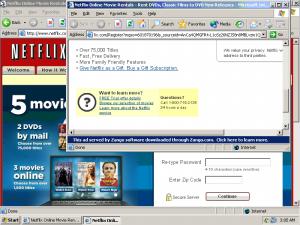
In testing of April 11, my automated testing system browsed Netflix. AutoTester found traffic flowing from Vomba to LinkShare, then back to Netflix. URL log:

http://services.vombanetwork.com/vomba/popup.php
http://click.linksynergy.com/fs-bin/click?id=9SOCNdxbJKg&offerid=78684…
http://www.netflix.com/Signup?mqso=60187019&ls_sourceid=9SOCNdxbJKg-O9…

Example 4: Look2me, MyGeek (AdOn Network), Tcshoppingdeals, Apluswebdeals, and LinkShare

Look2me, MyGeek (AdOn Network), Tcshoppingdeals, Apluswebdeals, LinkShare Claiming Commissions on Netflix's Organic Traffic Look2me, MyGeek (AdOn Network), Tcshoppingdeals, Apluswebdeals, LinkShare Overcharging Netflix

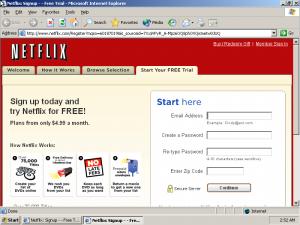
In testing of April 25, my automated testing system browsed Netflix. AutoTester found traffic flowing from Look2me (from Minnesota-based NicTech Networks) (widely installed without consent) to MyGeek (AdOn Network of Phoenix, Arizona) to Tcshoppingdeals (purportedly of Buffalo, New York) to Apluswebdeals (location unknown) to LinkShare, then back to Netflix. See screenshot at right and video. URL log:

http://www.ad-w-a-r-e.com/cgi-bin/UMonitorV2
http://url.cpvfeed.com/cpv.jsp?p=110250&ip=…&url=http://www.netflix….
http://www.tcshoppingdeals.com/r/link.php?id=12
http://www.a-pluswebdeals.com/visit/featured/?id=6
http://click.linksynergy.com/fs-bin/click?id=7XxjiVPyR/A&offerid=78684…
http://www.netflix.com/Signup?mqso=60187019&ls_sourceid=7XxjiVPyR_A-Mp…

Example 5: Web Nexus, Mediatraffic, Ccg360, and LinkShare

Web Nexus, Mediatraffic, Ccg360, LinkShare Claiming Commissions on Netflix's Organic Traffic Web Nexus, Mediatraffic, Ccg360, LinkShare – Netflix

In testing of May 12, my automated testing system browsed Netflix. AutoTester found traffic flowing from Web Nexus (widely installed without consent) to Mediatraffic (one-and-the-same as Integrated Search Technologies and Vomba) to Ccg360 (purportedly Nelson Cheung of Markham, Canada) to LinkShare, and back to Netflix. See screenshot at right. URL log:

http://stech.web-nexus.net/cp.php?loc=295&cid=…
http://stech.web-nexus.net/mtraff.php/9951709/295/527/…
http://cpvfeed.mediatraffic.com/feed.php?ac=1239&kw=netflix&ip=…
http://cpvfeed.mediatraffic.com/redir.php?ac=1239&sac=&dat=…
http://netflix.med.ccg360.com
http://click.linksynergy.com/fs-bin/click?id=kic1Ixnq*SQ&offerid=…
http://www.netflix.com/Signup?mqso=60187019&ls_sourceid=kic1Ixnq.SQ-D…

Example 6: Zango, Roundads, and LinkShare

Zango, Roundads, LinkShare Claiming Commission on Netflix's Organic Traffic Zango, Roundads, LinkShare – Netflix

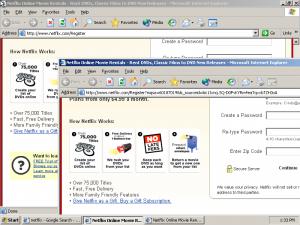
In testing of May 20, my automated testing system browsed Netflix. AutoTester found traffic flowing from Zango to Roundads to LinkShare and back to Netflix. See screenshot, video, and URL log:

http://tvf.zango.com/showme.aspx?…CD=www.netflix.com…
http://ads.roundads.com/ads/dvd.aspx?keyword=.netflix.com/Register
http://click.linksynergy.com/fs-bin/click?id=AnCa4QMGFR4&offerid=786…
http://www.netflix.com/Signup?mqso=60187019&ls_sourceid=AnCa4QMGFR4-…

In each of these four Netflix examples, spyware sent traffic to LinkShare and then onwards to Netflix — all predicated on users first requesting Netflix directly. So as in the two Blockbuster examples, the spyware provides no bona fide advertising benefit. Instead, the spyware vendors simply claim payments from Netflix without providing any service in return — a glaring reason why Netflix should refuse to pay them. Aside from reducing wasteful advertising spending, Netflix might also want to sever these relationships because the underlying spyware imposes serious costs on consumers: Sneaking onto users’ computers, reducing performance, and diminishing both reliability and privacy.

Netflix might reasonably blame LinkShare for the actions of these affiliates. LinkShare specifically touts its “high quality network” with “better affiliates,” whereas these affiliates are the very opposite of high quality. Furthermore, LinkShare prominently claims its service is “cost-efficient” — even as these examples entail Netflix paying for traffic it could have received for free.

Additional Examples on File

The preceding five examples are only a portion of my recent records of spyware advertising fraud and of other spyware advertising. My AutoTester collects dozens of examples per day, and I’ve documented literally hundreds of rogue affiliates during the past year — including dozens of affiliates through each of Commission Junction, LinkShare, and Performics, as well as various affiliates using smaller networks. Any affiliate merchant without a specific plan for detecting and blocking spyware-originating traffic is virtually certain to be receiving — and paying for — this bogus self-targeting spyware-originating traffic.

Winners and Losers

The clearest effect of self-targeting pop-ups is to overcharge merchants. Self-targeting pop-ups ask merchants to pay affiliate commissions on their organic traffic — traffic they should receive for free, thanks to advertising in other media, word of mouth, and repeat buyers. But if merchants fail to take action to protect themselves, they needlessly pay commissions on this organic traffic. Merchants then also pay affiliate network fees and, often, affiliate manager fees too — making the waste that much larger.

Secondarily, self-targeting pop-ups skim commissions from other affiliates. Consider a bona fide rule-following affiliate sending traffic to a targeted merchant. If a spyware self-targeting pop-up intercedes to drop its own affiliate cookies, it overwrites the cookies of the initial affiliate. Affiliate merchants pay commissions on a “last cookie wins” basis — so the first affiliate gets nothing, even though its link truly sent the user to the merchant’s site and actually put the sale in motion. (Examples: 1, 2, 3, 4)

But self-targeting does have beneficiaries. The clearest beneficiaries are the spyware vendors that show self-targeting pop-ups — whether showing these ads directly (with the spyware vendor acting as an affiliate) or indirectly (with some affiliate buying spyware traffic and sending it onwards to a network and a merchant). The resulting revenues fund spyware vendors’ infections, installations, and other expenses.

At least in the short run, self-targeting also benefits affiliate networks. Affiliate networks typically charge merchants a percentage of each commissionable sale. So the more commissions a merchant pays out, the higher the revenues of the merchant’s network. Self-targeting pop-ups convert non-commissionable organic traffic into supposedly-commissionable supposedly-affiliate-originating traffic — expanding networks’ fee base. In the long run, self-targeting fraud could reduce merchants’ interest in affiliate marketing, but in the short run it provides networks with additional revenue. This conflict surely explains at least a portion of networks’ failure to effectively eliminate self-targeting spyware. (Further discussion.)

Nonetheless, I’ve long thought that self-targeting and other spyware traffic present a substantial opportunity for networks seeking to offer increased value to sophisticated merchants. A savvy network could stand behind the quality of its affiliates, exercising real diligence in catching fraud and in protecting merchants from the risk of wasteful, unnecessary payments. Networks can implement protections more efficiently and at lower cost than merchants, because networks can kick out affiliates across their entire network, rather than merely from a single a single merchant’s program. That said, to date the largest three affiliate networks all still receive substantial spyware-originating traffic, including self-targeting traffic.

Revenue Counterfactual

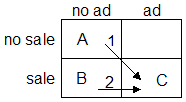
The self-targeting profit opportunity ultimately arises out of mismeasurement of merchants’ own traffic. Networks’ tracking systems encourage merchants to consider the counterfactual labeled #1 in the diagram at right — comparing the sales they made (point C in the diagram) against the supposed counterfactual of not paying commissions and hence not receiving the specified sales (point A). That’s the right comparison for many kinds of advertising, but in these self-targeting examples, it’s entirely misguided. Here, the only appropriate comparison is #2 — comparing the sale that was made with payment of the specified commission (C), versus the very same sale without any commission (B). The difference is stark: In #1, the merchant is pleased to have made a sale at a reasonable marketing expense. But in #2, the true state of affairs, the merchant is paying out commissions without any business benefit whatsoever.

Responses & Next Steps

In Netflix’s 2007 Q1 earnings call, CFO Barry McCarthy noted that Netflix’s recent “word-of-mouth subscriber growth was weak.” There are multiple plausible explanations for that change, but advertising fraud is an important additional factor to consider: In the examples set out above, Netflix would mistakenly pay Look2me, Vomba, Web Nexus, and Zango even if a consumer in fact signed up thanks to a word-of-mouth recommendation rather than as a result of those vendors’ advertising. With marketing costs already consuming more than 23% of Netflix’s revenues, any reduction seems both overdue and welcome.

What will Netflix, Blockbuster, and other affiliate merchants do in response to these examples? One immediate action item is to sever their ties with the specific affiliates I have identified. Merchants could also demand repayment of any commissions previously paid out — a challenging task with small affiliates, but probably possible for some larger affiliates.

More generally, merchants must decide how to protect themselves from the many cheating affiliates not reported here. As usual (1, 2), I think the answer is auditing and enforcement. Merchants can run tests themselves, hire a consulting service (like AffiliateFairPlay), or build an automating testing system to find violations. But ignoring these scams is unpalatable because inaction means wasting merchants’ advertising budgets, penalizing rule-following affiliates, and helping support spyware vendors.

How Spyware-Driven Forced Visits Inflate Web Site Traffic Counts

The usual motive for buying spyware popup traffic is simple: Showing ads. Cover Netflix’s site with an ad for Blockbuster, and users may buy from Blockbuster instead. Same for other spyware advertisers.

But there are other plausible reasons to buy spyware traffic. In particular, cheap spyware traffic can be used to inflate a site’s traffic statistics. Buying widespread “forced visits” causes widely-used traffic measurements to overreport a site’s popularity: Traffic measurements mistakenly assume users arrived at the site because they actually wanted to go there, without considering the possibility that the visit was involuntary. Nonetheless, from the site’s perspective, forced visits offer real benefits: Investors will be willing to pay more to buy a site that seems to be more popular, and advertisers may be willing to pay more for their ads to appear. In some sectors, higher reported traffic may create a buzz of supposed popularity — helping to recruit bona fide users in the future.

Yet spyware-originating forced-visit traffic can cause serious harm. Harm may accrue to advertisers — by overcharging them as well as by placing their ads in spyware they seek to avoid. Harm may accrue to investors, by causing them to overpay for sites whose true popularity is less than traffic statistics indicate. In any event, harm accrues to consumers and to the public at large, through funding of spyware that sneaks onto users’ PCs with negative effects on privacy, reliability, and performance.

Others have previously investigated some of these problems. In December 2006, the New York Times reported that Nielsen/NetRatings cut traffic counts for Entrepreneur.com by 65% after uncovering widespread forced site visits. But forced-visit traffic is more widespread than the four specific examples the Times presented.

This article offers six further examples of sites receiving forced visits — including the spyware vendors and ad networks that are involved. The article concludes by analyzing implications — suggested policy responses for advertisers and ad networks, as well as ways of detecting sites receiving forced visits.

Example 1: IE Plugin and Paypopup Promoting Bolt.com

IE Plugin Promoting Bolt.com IE Plugin Promoting Bolt.com

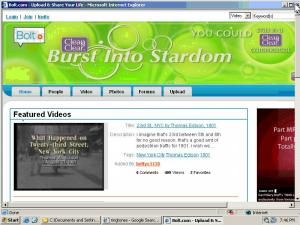
In testing of April 23, I browsed Google and received the popunder shown at right (after activation) and in video. Packet log analysis reveals that traffic flowed as follows: From IE Plugin (purportedly of Belize), to Paypopup (of Ontario, Canada), to Paypopup’s multi-pops.com ad server, to Bolt (of New York). URLs in the sequence:

http://66.98.144.169/redirect/adcycle.cgi?gid=9&type=ssi&id=396
http://paypopup.com/adsDirect.php?cid=1133482&ban=1&id=ieplugin&sid=10794&pub…
http://service.multi-pops.com/adsDirect.php?ban=1&id=ieplugin&cid=1133482&sid…
http://service.multi-pops.com/links.php?data=rSe_2%2F%FE%2F1%285%FE1%2F%2B%24…
http://service.multi-pops.com/linksed.php?sn=851177371957&uip=…&siteid=iepl…
http://www.bolt.com/

As shown in the packet log, this traffic originated with IE Plugin’s Adcycle.cgi ad-loader. This ad-loader sends traffic to a variety of ad networks, as best I can tell without any targeting whatsoever. Users therefore receive numerous untargeted ad windows, typically appearing as popups and popunders.

The resulting Bolt window appears without any attribution or branding indicating what spyware caused it to appear. This lack of labeling makes it particularly hard for users to figure out what program is responsible or to take action to stop further unwanted ads. IE Plugin’s unlabeled ads are particularly harmful because users may not have authorized the installation of IE Plugin in the first place: I have repeatedly seen IE Plugin install without user consent, including via bundles assembled by notorious spyware distributor Dollar Revenue.

The packet log indicates that Bolt purchased traffic not from IE Plugin directly, but rather from Paypopup. But Paypopup’s name and product descriptions specifically indicate the kind of ads that Paypopup sells forced visits — popups that appear without an affirmative end-user choice. The inevitable result of such traffic purchases is to inflate the measured popularity of the beneficiary web sites. So even if Bolt did not know it was buying spyware-originating advertising, Bolt must have known it was receiving forced visit traffic.

The packet log also shows that Paypopup specifically knew it was doing business with IE Plugin. Notice the repeated references to IE Plugin in the Paypopup and Multi-pops ad-loader URLs (“id=ieplugin”).

Bolt’s “About” page includes a claim of “reach[ing] 14.9 million unique visitors each month.” Taking this claim at face value, Bolt’s relationship with Paypopup and IE Plugin begs the question: How many of Bolt’s visitors are forced to see Bolt because spyware took them there, rather than because they affirmatively chose it?

Meanwhile, Bolt boasts top-tier advertisers including Verizon (shown in part in the screenshot above), Coca-Cola, Nike, and Sony. These brand-conscious advertisers are unlikely to want their ads to appear through spyware-delivered popups.

Example 2: Yourenhancement, Adtegrity, Right Media Exchange, and AdOn Network (MyGeek) Promoting PureVideo Networks’ GrindTV

Yourenhancement Promoting GrindTV Yourenhancement Promoting GrindTV

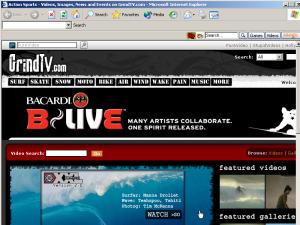
In testing of April 29, I browsed the web and received the full-screen popup shown at right. The popup was so large and so intrusive that it even covered the Start Menu, Taskbar, and System Tray — preventing me from easily switching to another program.

Packet log analysis reveals that traffic flowed as follows: From Yourenhancement (of Los Angeles), to Adtegrity (of Grand Rapids, Michigan), to the Right Media Exchange, to AdOn Network (previously MyGeek/Cpvfeed) (of Phoenix, Arizona) to Grind TV (of El Segundo, California). URLs in the sequence:

http://63.123.224.168/mbop/display.php3?aid=19&uid=…
http://ad.adtegrity.net/imp?z=0&Z=0x0&s=4670&u=http%3A%2F%2F63.123.224.168…
http://ad.yieldmanager.com/imp?z=0&Z=0x0&s=4670&u=http%3A%2F%2F63.123.224….
http://ad.adtegrity.net/iframe3?AAAAAD4SAADV5AMAtnIBAAIADAAAAP8AAAABEwACAA…
http://ad.yieldmanager.com/iframe3?AAAAAD4SAADV5AMAtnIBAAIADAAAAP8AAAABEwA…
http://campaign.cpvfeed.com/cpvcampaign.jsp?p=110459&campaign=Mortgage&aid…
http://www.grindtv.com/p/hs444/mygeek/

Yourenhancement’s display.php3 ad-loader sends traffic to a variety of ad networks, by all indications without any targeting whatsoever. Users therefore receive numerous untargeted popups and popunders. As in the prior example, the resulting window lacks any branding to indicate what spyware caused it to appear or how users can prevent future popups from the same source.

Yourenhancement’s unlabled ads are particularly harmful because users may not have authorized the installation of Yourenhancement in the first place: I have repeatedly seen Yourenhancement install without user consent — including in bundles assembled by DollarRevenue, in WMF exploits served from ExitExchange, in misleading ActiveX bundles packaged by IE Plugin, and in a CoolWebSearch exploit served from Runeguide.

The packet log indicates that GrindTV purchased traffic not from Fullcontext directly, but rather from AdOn Network. However, advertising professionals should know that buying advertising from AdOn Network inevitably means receiving traffic from spyware. For example, Direct Revenue’s site previously disclosed that Direct Revenue shows AdOn ads, while AdOn’s site admitted showing ads through both Direct Revenue (“OfferOptimizer”) and Zango (180solutions). My site has repeatedly covered AdOn’s role in spyware placements (1, 2, 3, 4). I continue to observe traffic flowing directly to MyGeek from various spyware installed without user consent, including Look2me and Targetsaver. With voluminous documentation freely available, advertisers cannot reasonably claim not to know what kind of ads AdOn sells.

The GrindTV site is operated by PureVideo Networks. I have previously seen spyware-originating forced visits to other PureVideo sites, including Stupidvideos.com and Hollywoodupclose.com.

PureVideo’s “News” page specifically touts the company’s reported popularity (“among top 10 US video sites by market share”, “top growing sites”, “StupidVideos Climb Charts”, etc.). In March, ComScore even announced that PureVideo sites were the ninth-fastest growing properties on the web. But in that same month, I observed widespread forced-visit promotion of multiple PureVideo sites. Forced visits can easily cause a dramatic traffic jump — the same occurrence ComScore reported. It’s hard to know whether PureVideo’s forced visits inflated ComScore’s measurements of PureVideo’s popularity, but that seems like a plausible possibility, particularly in light of Nielsen/NetRatings’ 2006 cut of Entrepreneur’s traffic (after Entrepreneur had used similar tactics).

PureVideo’s Investors & Advisors page indicates that PureVideo has received outside investment, including a $5.6 million investment from SoftBank Capital.

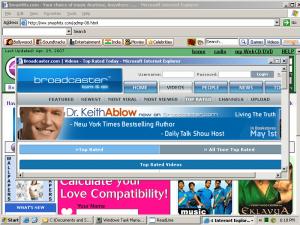
Example 3: Yourenhancement, Adtegrity, Right Media Exchange, and AdOn Network (MyGeek) Promoting Broadcaster.com

Yourenhancement Promoting GrindTV Yourenhancement Promoting Broadcaster

In testing of April 29, I browsed the web and received the popup shown at right.

Packet log analysis reveals that traffic flowed as follows: From Yourenhancement (widely installed without consent, as set out above) to Adtegrity, to the Right Media Exchange, to AdOn Network to Broadcaster (of Las Vegas). URLs in the sequence:

http://63.123.224.168/mbop/display.php3?aid=18&uid=…
http://ad.adtegrity.net/imp?z=0&Z=0x0&s=113743&u=http%3A%2F%2F63.123.224.1…
http://ad.yieldmanager.com/imp?z=0&Z=0x0&s=113743&u=http%3A%2F%2F63.123.2….
http://ad.adtegrity.net/iframe3?AAAAAE-8AQBJ6wQARMcBAAIACAAAAP8AAAABEwACAA…
http://ad.yieldmanager.com/iframe3?AAAAAE-8AQBJ6wQARMcBAAIACAAAAP8AAAABEwA…
http://campaign.cpvfeed.com/cpvcampaign.jsp?p=110495&campaign=121kwunique&…
http://url.cpvfeed.com/cpv.jsp?p=110495&aid=501&partnerMin=0.0036&…
http://www.broadcaster.com/tms/video/index.php?show=trated&bcsrtkr=a85d2&u…

As in the preceding example, traffic originated with Yourenhancement’s display.php3 ad-loader, and lacked any branding to indicate its source. The preceding example reports some of the many contexts in which Yourenhancement has become installed on my test PCs without my consent.

The packet log indicates that GrindTV purchased traffic from AdOn. But as the preceding example explains, Broadcaster should reasonably have known that buying traffic from AdOn means receiving forced-visit traffic as well as spyware-originating traffic.

Broadcaster has recently issued press releases to promote its increased traffic (“Broadcaster traffic rankings soar … one of the fastest growing online entertaining communities”; “88% increase in month-over-month website traffic”; “Tremendous audience growth”; etc.). So Broadcaster clearly views its traffic statistics as important. Yet nowhere in Broadcaster’s press releases does Broadcaster mention that its reported visitor counts include visitors who arrived involuntarily.

Broadcaster is a publicly traded company (OTC: BCSR.OB). Broadcaster’s December 2006 SEC 10KSB/A disclosure does briefly discuss Broadcaster’s purchase of “online advertisements … to attract new users” to its service. But the word “advertisements” tends to suggest mere solicitations (e.g. banner ads), not full impressions that cause a loading of Broadcaster’s site (and hence a tick in reported traffic figures). In my review of this and other Broadcaster financial documents, I could find no direct admission that Broadcaster buys cheap forced visits, then counts those involuntary visits towards records of site popularity. It appears that investors may be buying shares in Broadcaster without understanding the true origins of at least some of Broadcaster’s traffic.

This is not Broadcaster’s first run-in with spyware. Broadcaster’s Accessmedia subsidiary was named as a co-defendant in FTC and Washington Attorney General 2006 suits against Movieland et al., alleging that defendants’ software “barrages consumers’ computers with pop-up windows demanding payment to make the pop-ups go away.” According to the FTC’s complaint, Broadcaster’s Accessmedia subsidiary served as the registrant and technical contact for Movieland.com, and also shared telephone numbers and customer service with Movieland.

Example 4: Web Nexus Promoting Orbitz’s Away.com

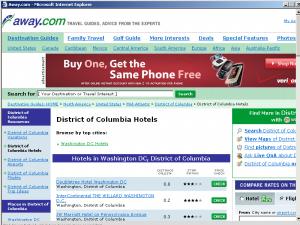
Web Nexus Promoting Orbitz's Away.com Web Nexus Promoting Orbitz’s Away.com

In testing of April 29, I browsed the web and received the full-screen popup shown at right. As in Example 2, the popup even covered the Start Menu, Taskbar, and System Tray — preventing me from easily switching to another program. Meanwhile, the ad appeared substantially unlabeled — with a small Web Nexus caption at ad bottom, but with the caption’s letters more than half off-screen.

Packet log analysis reveals that traffic flowed as follows: From Web Nexus (purportedly of Bosnia and Herzegovina) directly to Orbitz’s Away.com. URLs in the sequence:

http://stech.web-nexus.net/cp.php?loc=295&cid=9951709&u=bmV0ZmxpeC5jb20v&e…
http://stech.web-nexus.net/sp.php/9905/28779/295/9951709/527/
http://travel.away.com/District-of-Columbia/travel-sc-hotels-1963-District…

The packet log indicates that Away.com received traffic directly from Web Nexus. Web Nexus is well-known to be unwanted advertising software: The first page of Google search results for “Web Nexus” includes five references to spyware, four to adware, one to viruses, and six to user complaints seeking assistance with removal. I have personally observed Web Nexus becoming installed through a WMF exploit and through the DollarRevenue bundler, among other methods.

Orbitz’s Away.com popup provides three distinct business benefits to Orbitz. First, the popup promotes Orbitz’s own services (e.g. its hotel booking services). Second, the popup promotes Orbitz’s advertisers (here, Verizon, despite Verizon’s repeatedlystated policy of not advertising through spyware). Finally, the popup inflates traffic statistics to Away.com — likely increasing advertisers’ future willingness to pay for ads at Away.com.

Example 5: WebBuying and Exit Exchange Promoting Roo TV

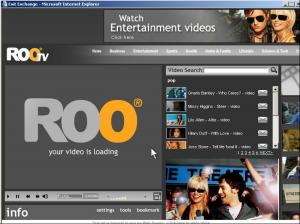
WebBuying Promoting Roo TV WebBuying Promoting Roo TV

In testing of April 23, I browsed the web and received the full-screen popup shown at right. As in Example 2 and 4, the popup covered the Start Menu, Taskbar, and System Tray, and lacked readable labeling of its source.

Packet log analysis reveals that traffic flowed as follows: From WebBuying (a newer variant of Web Nexus) to ExitExchange to Roo TV. URLs in the sequence:

http://s.webbuying.net/e/sp.php/5ers7+aSiObv7uvm7e_v6e7o6e3m6erk
http://count.exitexchange.com/exit/1196612
http://ads.exitexchange.com/roo/?url=http://www.rootv.com/?channel=pop&f…
http://www.rootv.com/?channel=pop&fmute=true&bitrate=56

The packet log indicates that Roo TV received traffic directly from Exit Exchange — traffic that Exit Exchange reasonably should have known would include spyware-originating traffic. Exit Exchange widely receives spyware-originating traffic, passing from a variety of spyware to Exit Exchange, and onwards to Exit Exchange’s advertisers. (For example, in June 2006 I showed Exit Exchange receiving traffic from Surf Sidekick spyware, widely installed without consent. Meanwhile, SiteAdvisor rates Exit Exchange red for delivering exploits to users’ PCs — behavior I documented in February 2006 and observed twice last week alone.)

The Roo TV landing page URL leaves no doubt that Roo TV knew it was receiving forced visits. Notice the “channel-pop” tag in the URL log above — specifically conceding that the traffic at issue was not requested by users.

Roo TV’s “About” page reveals Roo’s emphasis on traffic quantity: The page’s first sentence boasts that “Roo is consistently ranked as one of the world’s ten most viewed online video networks.” But, as in the preceding examples, forced visits raise questions about how Roo got so popular. Is Roo a top-ten site in users’ minds, or only a destination users are frequently forced to visit, against their wishes?

Example 6: WebBuying Promoting Diet.com

WebBuying Promoting Diet.com WebBuying Promoting Diet.com

In testing of April 23, WebBuying also served a full-screen popup of Diet.com — again covering the Start Menu, Taskbar, and System Tray, and again lacking readable labeling to disclose its source. Screen-capture video.

Packet log analysis reveals that traffic flowed from WebBuying directly to Diet:

http://c.webbuying.net/e/check.php?cid=13352451&lid=327&cc=US&u=aHR0cDov…
http://s.webbuying.net/e/sp.php/6+rv6uaSiObv7uvm7e_v6e7o6e3m6erk
http://www.diet.com/tracking/index.php?id=1052

As in the Away.com example, Diet.com receives several benefits from this popup: Promoting its own content, showing ads for third parties (here, Nutrisystem), and inflating its traffic statistics.

Alexa’s traffic statistics show a 5x+ jump in Diet traffic in early March — the same period in which I began observing forced visits to Diet.com.

Additional Examples on File

The preceding six examples are only a portion of my recent records of spyware-originating forced-visit I have recently observed. Under euphemisms that range from “audience development” to “push traffic,” these tactics have become widespread and, by all indications, continue to grow. I have seen other popups from each of these sites on numerous other occasions, and I have seen similar popups from other sites delivered via similar methods.

Implications & Policy Responses

Video sites are strikingly prevalent in the preceding examples and in other forced-visit traffic I have observed. Why? Google’s $1.65 billion acquisition of YouTube inspired others hoping to receive even a fraction of YouTube’s valuation. So far no competitor has gained much traction. But the expectation that video sites grow virally creates an incentive to try to jump-start traffic by any means possible — even spyware-originating traffic.

When forced-visit sites show ads, they tend to promote well-known advertisers. For example, two of the preceding examples (1, 4) feature Verizon, despite Verizon’s stated policy against spyware advertising. While concerned advertisers have generally added anti-spyware policies to their ad contracts, they still tend to ignore the problem of web sites buying spyware traffic. Verizon staff will probably take the position that it is not permissible for a Verizon ad to be shown in a site that receives widespread spyware traffic. But then Verizon’s ad contracts and other policy statements probably need to say so. Same for ad networks seeking to avoid reselling spyware inventory. In practice, few ad policies prohibit intermediary sites buying spyware-originating traffic.

Low-cost spyware-originating traffic can vastly increase a site’s reported popularity. Consider Alexa’s plot of Roo TV traffic. During April 2007 (when I first began to observe spyware-originating forced visits of Roo TV), Alexa reports that Roo’s reach and page views both jumped by an order of magnitude. It is difficult to know how much of this jump results from spyware-originating forced-visit traffic — rather than other kinds of forced visits, or conceivably bona fide user interest. But the New York Times piece reported that when ComScore last year adjusted Entrepreneur’s statistics to account for forced visits, traffic was reduced by 65%. A similar reduction may be required for the sites set out above.

When forced-visit sites show banner ads, the sites raise many of the same concerns as banner farms — including overwhelming advertising, unrequested popups, automatic reloads, opaque resale of spyware-originating traffic, and an overall bad value to advertisers. Particularly prominent among spyware-delivered banner farms is India Broadcast Live’s Smashits — which buys widespread spyware-originating forced-visit traffic, and shows as many as six different banner ads in a page that otherwise lacks substantial content. In some instances, Smashits’ page hijacks users’ browsers: Spyware removes the page a user had requested, and instead shows only the Smashits site. (Video example.) These practices may lead concerned advertisers and ad networks to avoid doing business with Smashits, including Smashits’ many alter egos and secondary domain names. But at present, Smashits continues to show ads from top advertisers and ad networks (particularly FastClick, Google, and TribalFusion). Same for other banner farms still in operation.

Detection

Sophisticated advertisers and ad networks rightly want to know which sites are buying spyware-originating forced-click traffic. But they can’t answer that question merely by examining individual sites: Bolt, GrindTV, and kin all look like ordinary sites, without any obvious sign that they get traffic from spyware. So advertisers and networks’ can’t catch spyware-originating traffic. using their usual techniques for evaluating publishers (such as browsing publishers’ sites in search of explicit or offensive materials).

Advertisers and ad networks might look for unusual changes in sites’ reported traffic rank — on the view that extreme spikes probably indicate forced-visit traffic. But there can be legitimate reasons for traffic spikes. Furthermore, an unexpected traffic jump will often prove an insufficient reason to block a prospective advertising relationship. Finally, if advertisers and ad networks distrusted sites with traffic spikes, sites could start their forced-click campaigns more gradually, to avoid tell-tale jumps. So checking for traffic spikes is not a sustainable strategy.

With help from traffic measurement vendors, advertisers and ad networks could attempt to measure visit length rather than visit count. But even visit length measurement might not prevent miscounting of spyware-originating forced visits. Some spyware opens sites off-screen — where JavaScript or other code could extend traffic indefinitely to inflate measured visit length as needed, without users noticing and closing the resulting windows.

The only robust way to detect spyware-originating forced visits is through testing of actual spyware-infected PCs — by watching their behavior and seeing what sites they show. Historically, I’ve done this testing manually, as in the examples set out above. Fortunately, detecting widespread spyware-originating traffic is easy — because, by hypothesis, the traffic is common and hence likely to appear even in brief testing. That said, a scalable automated system might be preferable to my hands-on testing. I’ve recently built an automatic tester that performs this function, among others. I’ll describe it more in a coming piece. US patent pending.

Advertising Through Spyware — After Promising To Stop

On January 29, the New York Attorney General announced an important step in the fight against spyware: Holding advertisers accountable for their payments to spyware vendors. This is a principle I’ve long endorsed — beginning with my 2003 listing of Gator advertisers (then including Apple, Chrysler, and Orbitz), and continuing in my more recent articles about advertising intermediaries funding spyware and specific companies advertising through spyware.

I’m not the only one to applaud this approach. FTC Commissioner Leibowitz recently commended the NYAG’s settlement, explaining that “advertising dollars fuel the demand side of the nuisance adware problem by giving [adware vendors] the incentive to expand their installed base, with or without consumers’ consent.” In a pair of 2006 reports, the Center for Democracy and Technology also investigated spyware advertisers, attempting to expose the web of relationships that fund spyware vendors.

The NYAG’s settlement offers a major step forward in stopping spyware because it marks the first legally binding obligation that certain advertisers keep their ads (and their ad budgets) out of spyware. In Assurances of Discontinuance, Cingular (now part of AT&T), Priceline, and Travelocity each agreed to cease use of spyware. In particular, each company agreed either to stop using spyware advertising, or to use only “adware” that provides appropriate disclosures to users, prominently labels ads, and offers an easy procedure to uninstall. These requirements apply to ads purchased directly by Cingular, Priceline, and Travelocity, as well as to all marketing partners acting on their behalf.

These important promises are the first legally-binding obligations, from any Internet advertisers, to restrict use of spyware. (Compare, e.g., advertisers voluntarily announcing an intention to cease spyware advertising — admirable but not legally binding.) If followed, these promises would keep the Cingular, Priceline, and Travelocity ad budgets away from spyware vendors — reducing the economic incentive to make and distribute spyware.

But despite their duties to the NYAG, both Cingular and Travelocity have failed to sever their ties with spyware vendors. As shown in the six examples below, Cingular and Travelocity continue to receive spyware-originating traffic, including traffic from some of the web’s most notorious and most widespread spyware, in direct violation of their respective Assurances of Discontinuance. That said, Priceline seems to have succeeded in substantially reducing these relationships — suggesting that Cingular and Travelocity could do better if they put forth appropriate effort.

Example 1: Fullcontext, Yieldx (Admedian), Icon Media (Vizi) Injecting Travelocity Ad Into Google

A Travelocity Ad Injected into Google by Fullcontext A Travelocity Ad Injected into Google by Fullcontext

Travelocity
money viewers
   Icon (Vizi Media)    
money viewers
   Yieldx (Ad|Median)    
money viewers
Fullcontext

The Money Trail – How Travelocity Pays Fullcontext

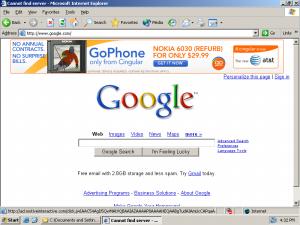
On a PC with Fullcontext spyware installed (controlling server 64.40.99.166), I requested www.google.com. In testing of February 13, I received the image shown in the thumbnail at right — with a large 728×90 pixel banner ad appearing above the Google site. Google does not sell this advertising placement to any advertiser for any price. But Fullcontext spyware placed Travelocity’s ad there nonetheless — without permission from Google, and without payment to Google.

As shown in the video I preserved, clicking the ad takes users through to the Travelocity site. The full list of URLs associated with this ad placement:

http://64.40.99.166/adrotate.php
http://ad.yieldx.com/imp?z=6&Z=728×90&s=41637&u=http%3A%2F%2Fwww.google.com…
http://ad.yieldmanager.com/imp?z=6&Z=728×90&s=41637&u=http%3A%2F%2Fwww.goog…
http://ad.yieldx.com/iframe3?jwIAAKWiAABdAwIA5soAAAAAxAEAAAAACwADBAAABgMKxQ…
http://ad.yieldmanager.com/iframe3?jwIAAKWiAABdAwIA5soAAAAAxAEAAAAACwADBAAA…
http://network.realmedia.com/RealMedia/ads/adstream_sx.ads/iconmedianetwork…
http://network.realmedia.com/RealMedia/ads/click_lx.ads/iconmedianetworks/e…
http://clk.atdmt.com/AST/go/247mancr0020000002ast/direct;at.astncr00000121;…
http://leisure.travelocity.com/RealDeals/Details/0,2941,TRAVELOCITY_CRU_354…

As shown in the URL log and packet log, Fullcontext initiated the ad placement by sending traffic to the Yieldx ad network. (Yieldx’s Whois reports an address in Hong Kong. But Yieldx is hosted at an IP block registered to Ad|Median, an ad network with headquarters near Minneapolis.) Using the Right Media Exchange marketplace (yieldmanager.com), Yieldx/Ad|Median then sold the traffic to Icon Media Networks (now Vizi Media of LA and New York), which placed the Travelocity ad. The diagram at right depicts the chain of relationships.

This placement is typical of the Fullcontext injector. I have tracked numerous Fullcontext placements, through multiple controlling servers. I retain many dozens of examples on file. See also prior examples posted to my public site: 1, 2, 3.

The Fullcontext injector falls far short of the requirements of Travelocity’s Assurance of Discontinuance. For one, users often receive Fullcontext without agreeing to install it — through exploits and in undisclosed bundles (violating Travelocity Assurance page 4, provision 11.a; PDF page 11). Furthermore, Fullcontext’s ads lack any branding indicating what adware program delivered them — violating Assurance provision 11.b, which requires such branding to appear prominently on each adware advertisement. Fullcontext’s uninstall and legacy user functions also fail to meet the requirements set out in the Assurance.

Example 2: Fullcontext and Motive Interactive Injecting Cingular Ad Into Google

A CingularAd Injected into Google by Fullcontext A Cingular Ad Injected into Google by Fullcontext

Cingular
money viewers
   Motive Interactive   
money viewers
Fullcontext

The Money Trail – How Cingular Pays Fullcontext

Through the MovieInteractive ad network, Fullcontext also injects the Cingular ad into Google. See screenshot at right, taken on February 17. On a PC with Fullcontext spyware installed (controlling server 64.40.99.166), I requested www.google.com. I received the image shown in the thumbnail at right — with a prominent Cingular banner ad appearing above Google. As in the case of Travelocity, this ad appeared without permission from Google and without payment to Google. Rather, the ad was placed into Google’s site by Fullcontext spyware.

The full list of URLs associated with this ad placement:

http://64.40.99.166/adrotate.php
http://ad.motiveinteractive.com/imp?z=6&Z=728×90&s=161838&u=http%3A%2F%2Fwww.goo…
http://ad.yieldmanager.com/imp?z=6&Z=728×90&s=161838&u=http%3A%2F%2Fwww.google.c…
http://ad.motiveinteractive.com/iframe3?jwIAAC54AgD5QwMAtVQBAAIAZAAAAP8AAAAHEQAA…
http://ad.yieldmanager.com/iframe3?jwIAAC54AgD5QwMAtVQBAAIAZAAAAP8AAAAHEQAABgTud…
http://clk.atdmt.com/goiframe/21400598/rghtccin0470000088cnt/direct;wi.728;hi.90…
http://www.cingular.com/cell-phone-service/cell-phone-details/?q_list=true&q_pho…

As shown in the URL log and packet log, Fullcontext sent traffic to Motive Interactive, a Nevada ad network. Using the Right Media Exchange marketplace (yieldmanager.com), Motive Interactive sold the traffic to Cingular. The diagram at right depicts the chain of relationships. Notice that Cingular’s relationship with Fullcontext is one level shorter than the Travelocity relationship in Example 1.

Cingular should have known that this traffic was coming from spyware, because detailed information about the ad placement was sent to Cingular’s web servers whenever a user clicked a FullContext-placed ad. The packet log shows the information sent to the Atlas servers operating on Cingular’s behalf:

http://view.atdmt.com/CNT/iview/rghtccin0470000088cnt/direct;wi.728;hi.90/01?click=http:// ad.motiveinteractive.com/click,jwIAAC54AgD5QwMAtVQBAAIAZAAAAP8AAAAHEQAABgTudAIAmUcCAPqaAAC
iJAIAAAAAAAAAAAAAAAAAAAAAAKdz10UAAAAA,,http%3A%2F%2Fwww%2Egoogle%2Ecom%2F,

The first portion of the URL specifies what ad is to be shown, while the portion following the question mark reports how traffic purportedly reached this ad. (This information structure is standard for Right Media placements.) Notice the green highlighted text — telling Atlas (and in turn Cingular) that this ad was purportedly shown at www.google.com. But Atlas and Cingular should know that the www.google.com page does not sell banner ads to any advertiser at any price. The purported placement is therefore impossible — unless the ad was actually injected into Google’s site using spyware. The presence of this Google URL in Cingular’s referer log should have raised alarms at Cingular and should have prompted further investigation.

Example 3: Deskwizz/Searchingbooth and Ad-Flow (Rydium) Injecting Travelocity Ad Into True.com

A Travelocity Ad Injected into True.com by Searchingbooth A Travelocity Ad Injected into True.com by Searchingbooth

Travelocity
money viewers
   Ad-Flow (Rydium)  
money viewers
Deskwizz/Searchingbooth

The Money Trail – How Travelocity Pays Searchingbooth

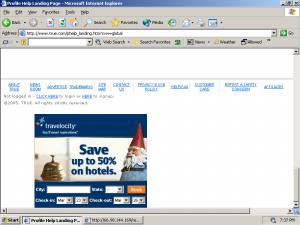
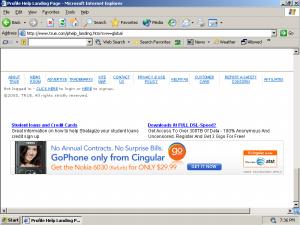
Fullcontext is just one of several active ad injectors that place ads into other companies’ sites. The screenshot at right shows a injection performed by Deskwizz/Searchingbooth. In March 9 testing, I requested True.com. Deskwizz placed a large (720×300) pixel banner into the top of the page (not shown), and another into the bottom. This latter banner, shown in the thumbnail at right, promoted Travelocity. Just as the preceding examples occurred without payment to or permission from Google, this placement occurred without payment to or permission from True.com. Rather, the ad was placed into Google’s site by Deskwizz/Searchingbooth spyware.

The full list of URLs associated with this ad placement:

http://servedby.headlinesandnews.com/media/servlet/view/banner/unique/url/strip?…
http://www.uzoogle.com/indexP.php?PID=811
http://www.uzoogle.com   [posted parameter: PID=811]
http://ad.ad-flow.com/imp?z=2&Z=300×250&s=118935&u=http%3A%2F%2Fwww.uzoogle.com%…
http://ad.yieldmanager.com/imp?z=2&Z=300×250&s=118935&u=http%3A%2F%2Fwww.uzoogle…
http://ad.doubleclick.net/adj/N447.rightmedia.com/B2130591.2;sz=300×250;click0=h…

As shown in the URL log and packet log, Deskwizz/Searchingbooth sent traffic to its Uzoogle ad loader, which forwarded the traffic onwards to Ad-Flow. (Ad-flow is the ad server of Rydium, a Toronto ad network.) The traffic then flowed through to the Right Media Exchange marketplace (yieldmanager.com), where it was sold to Travelocity. The diagram at right depicts the chain of relationships.

This placement is typical of Deskwizz/Searchingbooth. I have tracked a web of domain names operated by this group — including Calendaralerts, Droppedurl, Headlinesandnews, Z-Quest, and various others — that all receive traffic from and through similar banner injections. Z-quest.com describes itself as a “meta-search” site, while Uzoogle presents itself as offering Google-styled logos and branded search results. But in fact these sites all serve to route, frame, and redirect spyware-originating traffic, as shown above. I retain many dozens of examples on file. See also the multiple examples I have posted to my public site: 1, 2, 3, 4, 5.

Example 4: Deskwizz/Searchingbooth and Right Media Injecting Cingular Ad Into True.com

A Cingular Ad Injected into True.com by Searchingbooth A Cingular Ad Injected into True.com by Searchingbooth

Cingular
money viewers
   Yield Manager / Right Media Exchange  
money viewers
Deskwizz/Searchingbooth

The Money Trail – How Cingular Pays Searchingbooth

Deskwizz/Searchingbooth also injects Cingular ads into third parties’ sites, including into True.com. The screenshot at right shows the resulting on-screen display (as observed on March 9). The screenshot depicts a Cingular ad placed into True.com without True’s permission and without payment to True.

The full list of URLs associated with this ad placement:

http://servedby.headlinesandnews.com/media/servlet/view/banner/unique/url/strip?…
http://optimizedby.rmxads.com/st?ad_type=ad&ad_size=728×90&section=160636
http://ad.yieldmanager.com/imp?Z=728×90&s=160636&_salt=3434563176&u=http%3A%2F%2…
http://optimizedby.rmxads.com/iframe3?6B4AAHxzAgD5QwMAtVQBAAIAAAAAAP8AAAAGFAAABg…
http://ad.yieldmanager.com/iframe3?6B4AAHxzAgD5QwMAtVQBAAIAAAAAAP8AAAAGFAAABgJQF…
http://clk.atdmt.com/goiframe/22411278/rghtccin0470000088cnt/direct;wi.728;hi.90…

As shown in the URL log and packet log, Deskwizz/Searchingbooth sent traffic to the Right Media‘s Rmxads. The traffic then flowed through to the Right Media Exchange marketplace (yieldmanager.com), where it was sold to Cingular. The diagram at right depicts the chain of relationships.

Cingular should have known that this ad was appearing through spyware injections for the same reason presented in Example 2. In particular, the packet log reveals that specific information about ad context was reported to Cingular’s server whenever a user clicked an injected ad. This context information put Cingular on notice as to where its ads were appearing — including sites on which Cingular had never sought to advertise, and even including sites that do not accept advertising.

Example 5: Web Nexus, Traffic Marketplace Promoting Travelocity in Full-Screen Pop-Up Ads

Web Nexus Promotes Travelocity - Full-Screen Pop-Up Web Nexus Promotes Travelocity Using a Full-Screen Pop-Up

Travelocity
money viewers
   Traffic Marketplace   
money viewers
Web Nexus

The Money Trail – How Travelocity Pays Web Nexus

Although the four preceding examples all show banner ad injections, pop-up ads remain the most common form of spyware advertising. Spyware-delivered pop-ups continue to promote both Cingular and Travelocity. For example, Web Nexus is widely installed without consent (example) and in big bundles without the disclosures required by the Travelocity’s Assurance of Discontinuance. Yet Web Nexus continues to promote Travelocity through intrusive full-screen pop-ups, like that shown at right (taken on February 22). Indeed, this pop-up is so large and so intrusive that it even covers the Start button — preventing users from easily switching to another program or window.

The Travelocity ad at issue is also striking for its lack of branding or other attribution. A user who manages to move the pop-up upwards will find a small “Web Nexus” footer at the ad’s bottom edge. But this label initially appears substantially off-screen and hence unreadable. In contrast, Travelocity’s Assurance of Discontinuance (Travelocity section, page 4, provision 11.b; PDF page 11) requires that each adware-delivered advertisement be branded with a “prominent” name or icon. Because it appears off-screen, Web Nexus’s ad label cannot satisfy the NYAG’s prominence requirement. Furthermore, packet log analysis reveals that this placement is the foreseeable result of Web Nexus’s design decisions. Further discussion and analysis.

The full list of URLs associated with this ad placement:

http://stech.web-nexus.net/cp.php?loc=295&cid=9951709&u=ZWJheS5jb20v&en=&pt=3…
http://stech.web-nexus.net/sp.php/9157/715/295/9951709/527/
http://t.trafficmp.com/b.t/e48U/1172127347
http://cache.trafficmp.com/tmpad/content/clickhere/travelocity/0107/contextu…

As shown in the URL log and packet log, Web Nexus sent traffic to Traffic Marketplace (a New York ad network owned by California’s Vendare Media). The traffic then flowed through to Travelocity. The diagram at right depicts the relationships.

Example 6: Targetsaver, EasilyFound, LinkShare Promoting Cingular in Full-Screen Pop-Up Ads

TargetSaver Promotes Cingular Using a Full-Screen Pop-Up TargetSaver Promotes Cingular Using a Full-Screen Pop-Up

Cingular
money viewers
   LinkShare  
money viewers
   EasilyFound  
money viewers
TargetSaver

The Money Trail – How Cingular Pays TargetSaver

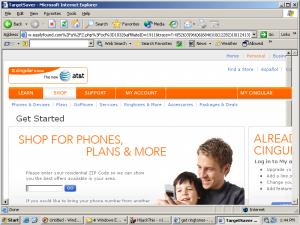
In testing of March 8, I searched for “get ringtones” at Google. I received the full-screen pop-up shown at right. This pop-up was served to me by TargetSaver spyware, widely installed consent (example) and with misleading and/or hidden disclosures (1, 2). These installation practices cannot meet Cingular’s duties under its Assurance of Discontinuance (Cingular section, page 4, provision 14.a; PDF page 18).

The full list of URLs associated with this ad placement:

http://a.targetsaver.com/adshow
http://www.targetsaver.com/redirect.php?…www.easilyfound.com%2Fa%2F2.php…
http://www.easilyfound.com/a/2.php?cid=1032
http://www.easilyfound.com/a/3.php?cid=1032
http://click.linksynergy.com/fs-bin/click?id=MCVDOmK0318&offerid=91613.100…
http://www.cingular.com/cell-phone-service/cell-phone-sales/free-phones.js…

As shown in the URL log and packet log, TargetSaver sent traffic to EasilyFound. EasilyFound then forwarded the traffic on to LinkShare, a New York affiliate network, which sent the traffic to Cingular.

Cingular should have known that a partnership with EasilyFound would entail Cingular ads being shown through spyware. EasilyFound describes itself as “a metacrawler search engine.” But in my extended testing, EasilyFound widely buys spyware-originating traffic and sends that traffic onwards to affiliate merchants (Cingular among others). I have previously described this general practice in multiple articles on my public web site. I have also publicly documented this very behavior by EasilyFound specifically. In May 2006 slides, I showed EasilyFound buying traffic from Targetsaver and sending that traffic onwards to LinkShare and Walmart. I even posted an annotated packet log and traffic flow diagram. My slides have been available on the web for approximately ten months. Yet, by all indications, this affiliate remains in good standing at LinkShare and continues the same practices I documented last year.

According to Whois data, EasilyFound is based in Santa Monica, California, although EasilyFound’s Contact page gives no street address.

Additional Examples on File

The preceding six examples are only a portion of my recent records of spyware-originating ads from Cingular and Travelocity. I retain additional examples on file. My additional examples include additional banner injections, additional pop-ups, additional traffic flowing through Cingular’s affiliate program (LinkShare), and traffic flowing through Travelocity’s affiliate program (Commission Junction).

In my extended testing during the past two months, I have recorded only a single example of Priceline ads shown by spyware. That placement occurred through Priceline’s affiliate program, operated by Commission Junction.

The Scope of the Problem

The Assurances of Discontinuance reflect the remarkable size of the advertising expenditures that triggered the New York Attorney General’s intervention.

  Cingular Wireless (AT&T) Priceline Travelocity
Amount spent with Direct Revenue At least $592,172 At least $481,765.05 At least $767,955.93
Duration of Direct Revenue relationship April 1, 2004 through October 11, 2005 May 1, 2004 through February 24, 2006 July 1, 2004 through April 15, 2006
Number of ads shown At least 27,623,257 At least 6,142,395 At least 2,103,341
Knowledge of Direct Revenue’s practices “Even though Cingular was aware of controversy surrounding the use of adware and was aware, or should have been aware, of Direct Revenue’s deceptive practices, including surreptitious downloads, Cingular continued to use Direct Revenue.” “Priceline knew that consumers had downloaded Direct Revenue adware without full notice and consent and continued to receive ads through that software.” “Travelocity was aware that Direct Revenue had … been the subject of consumer complaints that Direct Revenue had surreptitiously installed its software on consumers’ computers without adequate notice.”
Additional factors listed by NYAG   “Some of Priceline’s advertisements were delivered directly to consumers from web servers owned or controlled by Priceline.”  
Payment to New York $35,000 of investigatory costs and penalties $35,000 of investigatory costs and penalties $30,000 of investigatory costs and penalties

These three advertisers alone paid more than $1.8 million to Direct Revenue — approximately 2% of Direct Revenue’s 2004-2005 revenues. See detailed Direct Revenue financial records.

Affiliate Fraud Litigation Index

Some analysts view affiliate marketing as “fraud-proof” because affiliates are only paid a commission when a sale occurs. But affiliate marketing nonetheless gives rise to various disputes — typically, merchants alleging that affiliates claimed commission they had not properly earned. Most such disputes are resolved informally: merchants withhold amounts affiliates have purportedly earned but have not yet received. Occasionally, disputes end up in litigation with public availability of the details of alleged perpetrators, victims, amounts, and methods. This page presents known litigation in this area including case summaries and primary source documents.


Uber Technologies v. Hydrane SAS et. al.

Superior Court of California, County of San Francisco – Civil Case No. CGC19576493 – June 5, 2019

Core allegation: Placing Uber ads in prohibited sites and claiming commission on signups that were going to happen anyway

Factual allegations: See docket.

Amount in dispute: $70 million. (See second amended complaint, paragraph 91.)

Settled, May 2021.


Mary Kay Inc. v. Retailmenot, Inc.

U.S. District Court for Northern District of Texas – Civil Case No. 3:15-cv-00825-L – March 13, 2015

Core allegation: RMN purports to aggregate digital coupons, including from affiliate programs. RMN falsely claims to provide coupons for MK.

Legal claims: Trademark infringement, Unfair competition, False advertising, Trademark dilution


United States of America v. Allen J. Chiu and Andrew S. Chiu

U.S. District Court for Western District of Washington – Criminal Case No. CR12-070-RSM – March 14, 2012

Core allegation: Fake orders for affiliate commission. See indictment.

Charges: Fraud by Wire, Radio, or Television (18 USC ยง 1343)

Victims: Fatwallet, Nordstrom

Affiliate Network: LinkShare

Indictment alleges that Nordstrom initially disallowed the Chius from making purchases due to their excessive claims for merchandise purportedly lost in transit.

Indictment alleges that the Chius later noticed that their further orders continued to yield Fatwallet cashback credit even though Nordstrom correctly canceled the orders and never charged the Chiusโ€™ credit cards. The Chius placed additional orders totaling approximately $23 million in order to receive Fatwallet cashback on those purchases.

Complaint alleges that the Chius made multiple attempts to obtain their Fatwallet balance purportedly earned, including changing payee names, payee addresses, and payment methods.

The report of FBI investigator Cory Cote says the Chius obtained 787 separate checks from Fatwallet, sent to three different names at five different mailing addresses, using eighteen different Fatwallet accounts. Cote says the Chiusโ€™ orders from Nordstrom used 58 different credit cards.

After Fatwallet blocked the Chiusโ€™ withdrawals, Cote reports that the Chius attempted to collect cashback via Ebates, another cashback site. Despite using five different Ebates accounts, the Chius never received any funds from Ebates.

Amount in dispute:

Indictment alleges $1.4 million taken from Nordstrom. Of this amount, a portion was retained by Fatwallet and LinkShare as service fees, and the indictment reports the Chius receiving more than $650,000 of cashback from Fatwallet.

FBI investigator Cory Cote says the Chius caused transactions yielding more than $2 million of commissions and more than $1.1 million of cashback.

Indictment reports approximately $971,000 seized from the Chiuโ€™s personal and retirement accounts.

An August 2012 itemization indicates $1,413,525 paid by Nordstrom to FatWallet and an additional $157,303 paid by Nordstrom to LinkShare (of which LinkShare credited back $103,342 but retained $53,961.

Statement from Defendants: Defendantsโ€™ friends and colleagues filed ten letters in support of defendantsโ€™ character. (1, 2) Letter-writers: Albert Cheng of Google, Edwin Altomare, Calli Lewis of the University of North Texas, Hua Maggie Sun-Rubin of AT&T, Guillermo Perez-Vega of Trammell Crow Company, Scott Smith of Southern California Edison, Nitin Patel of ComEd, John Rusnak of ComEd, Ronald Hart of ComEd, and Bill Frederick.

Disposition:

Federal sentencing guidelines specified a sentencing range of 33-41 months (after adjustment for defendantsโ€™ lack of criminal history). The United States recommended 24 months and the court so ordered (Allen, Andrew).

Defendants forfeited “nearly all of their life savings”, totalling $971,810.86 (including funds earned from legitimate sources).

Defendants sought to avoid repaying amounts that were lost to Nordstrom but never received by Defendants (i.e. fees retained by FatWallet and LinkShare). The United States argued that these are part of Nordstromโ€™s loss and hence a required part of restitution. The Court ordered that restitution include the FatWallet and LinkShare fees without any offset for amounts those companies might return to Nordstrom.

Companion civil case by victim FatWallet:

Fatwallet, Inc. v. Andrew Chiu and Allen Chiu โ€“ complaint

U.S. District Court for Western District of Wisconsin – Civil Case No. 3:12-CV-00012-WMC – January 5, 2012

Legal claims: Theft by Fraud, Computer Fraud and Abuse Act (CFAA), Breach of Contract, Unjust Enrichment

Fatwallet complaint says Fatwallet is “exposed to a claim” that it repay Nordstrom.


United States of America v. Christopher Kennedy

U.S. District Court for Northern District of California – Criminal Case No. 5-10-CR-00082-JW. February 9, 2010

Core allegation: Writing software to perform cookie-stuffing. Information/complaint.

Victim: eBay

Affiliate Network: eBay Partner Network

Legal claim: Conspiracy to Commit Wire Fraud

Information alleges that Kennedy created a program, “Saucekit,” to assist eBay affiliates in performing cookie-stuffing. Alleges that Kennedy conspired with those affiliates in defrauding eBay.

Kennedy routed cookie-stuffing traffic via the many and seemingly-unrelated affiliate links of the various purchasers of Kennedyโ€™s Saucekit program.

Amount taken from victim: Information reports multiple Saucekit customers earning substantial commissions, including one nearing $10,000 per month.

Disposition: In a June 2012 plea agreement, Kennedy was sentenced to six months in prison and ordered to pay $407,934.39 to eBay in restitution. He was scheduled to begin serving his prison sentence on September 20, 2012.


Five separate cases as to Brian Dunning, Todd Dunning, Shan D. Hogan, Digital Point Solutions, Kessler’s Flying Circus, and Thunderwood Holdings – cookie-stuffing targeting eBay via Commission Junction

Case captions:

United States of America v. Brian Dunning. U.S. District Court for Northern District of California, Criminal Case No. 5:10-CR-00494-EJD, June 24, 2010. indictment and superseding information

eBay Inc. v. Brian Dunning; Thunderwood Holdings, Inc.; and Kesslerโ€™s Flying Circus. U.S. District Court for Northern District of California, Civil Case No. CV 08-4052-EJD-PSG, August 25, 2008. complaint

Commission Junction, Inc. v. Thunderwood Holdings, Inc. dba Kesslerโ€™s Flying Circus; Todd Dunning; Brian Dunning. Superior Court of the State of California for the County of Orange, Central Branch, Civil Case No. 30-2008 00101025. January 4, 2008. second amended complaint

United States of America v. Shawn D. Hogan. U.S. District Court for Northern District of California, Criminal Case No. 5:CR-10-0495-JF, June 24, 2010. indictment

eBay Inc. v. Shawn Hogan and Digital Point Solutions, Inc. U.S. District Court for Northern District of California, Civil Case No. CV 08-4052-EJD-PSG, August 25, 2008. complaint

Core allegation: Affiliate cookie-stuffing

Legal claims: Criminal charges against Dunning and Hogan: Wire Fraud Act; eBay civil charges against Dunning, Thunderwood Holdings, and Kessler’s Flying Circus, and Hogan: Computer Fraud and Abuse Act (CFAA), California ยง 502 (Computer Tampering), Restitution and Unjust Enrichment, California Business and Professions Code, Racketeer Influenced and Corrupt Organizations Act (RICO Act); Commission Junction civil charges: Breach of Contract, Open Book, Account, Reasonable Value, Conversion, Unfair Competition, Declaratory Relief

Indictments allege (Dunning, Hogan) that when users visited any of “a large number of web pages,” Defendants caused usersโ€™ computers to send requests to eBay reporting, falsely, that Defendant had referred them to eBay. Alleges that this occurred invisibly and without user knowledge. Alleges that when users happened to make purchases from eBay or open eBay accounts, Defendants collected marketing commissions. eBay complaint is in accord.

CJ complaint alleges that Defendants provided third parties with a widget placed on other sites, including on MySpace (allegedly in violation of MySpace terms) which wrongfully forced traffic to eBay.

Internal CJ correspondence reveals that CJ learned of Defendantsโ€™ infractions via a complaint from eBay, not via independent CJ investigations.

Methods of concealment:

eBay complaint alleges that Defendants used images on web pages to effectuate its cookie-stuffing scheme and intentionally set these images to be so small as to be effectively invisible.

eBay complaint alleges that Defendants only stuffed cookies once per user computer in order to avoid discovery by eBay or Commission Junction.

Indictments allege (Dunning, Hogan) that Defendants intentionally declined to stuff cookies to users near headquarters of eBay and Commission Junction. eBay complaint is in accord.

Dunning indictment alleges that Defendant knowingly misrepresented that his methods were “in line with” affiliate program rules.

The FBI report from interviewing Shawn Hogan presents Hoganโ€™s statements as to Dunning, including Hogan claiming Dunning “reverse engineer[ed]” Hoganโ€™s tools and “rip[]ped off” some of Hoganโ€™s tools. The associated search warrant (for search of Hoganโ€™s residence) includes details of the FBIโ€™s initial suspicions about Dunning, including a complaint from eBay.

Hogan indictment alleges that when Commission Junction representatives questioned Hogan about cookie-stuffing, he falsely attributed suspicious activity to “coding errors.”

eBay civil complaint alleges that Defendants only stuffed cookies once per user computer in order to avoid discovery by eBay or Commission Junction.

eBay civil complaint alleges that Defendants presented their JavaScript code in a way intended to “obscure[] the purpose and effect” to hinder investigation.

See also a declaration of an FBI agent who searched Hoganโ€™s home, as well as 88 pages of additional material including search warrant (with details of the FBIโ€™s initial suspicions and complaint from eBay), report from the search (including Hoganโ€™s statements during the search), and pictures of Hoganโ€™s home.

Amount at issue:

Dunning indictment alleges more than $5,300,000 in compensation from January 2006 to June 2007.

Hogan indictment alleges more than $15,500,000 in compensation from January 2006 to June 2007.

CJ civil complaint alleges that eBay did not pay CJ $565,517.84 despite CJ paying that amount to Defendants. CJ sought repayment of that amount by Defendants to CJ.

Defendant Dunning’s statements:

A Partial Explanation โ€“ Brian Dunning, October 5, 2011. – Describes Brianโ€™s understanding of the meaning of cookie-stuffing: “Take any web browser, erase all its cookies, and adjust its security preferences to allow third party cookies. Then, click through a few pages on any ad-supported web site, like Slate.com or HuffPo.com. Now look at your cookies. Youโ€™ll see that your browser is loaded with all sorts of cookies from strange web sites that you donโ€™t recognize. Thatโ€™s cookie stuffing. Itโ€™s a scary-sounding term, but itโ€™s fundamental to the way Internet advertising works.”

References Brianโ€™s anticipated defenses: “Obviously there are many intricacies here that go deeper, but I cannot give further details. There are several legal reasons that the lawsuit is improper, and weโ€™ve been fighting it on that basis. Hopefully it will never go to trial, but if it does, my defense depends on evidence that I cannot describe publicly. Itโ€™s quite an amazing story, and I look forward to telling it in full detail as soon as the circumstances make it possible.”

The FBI report from interviewing Dunning (attached to the United Statesโ€™ opposition to Dunningโ€™s motion to suppress evidence) includes Dunningโ€™s statements that eBayโ€™s affiliate program was “stupid”, and that he was “clever” in finding a way to take advantage of the program. The FBI agent interviewing Dunning reports that Dunning admitted using a 1ร—1 pixel to force an eBay cookie with his affiliate codes.

Dunning claims that a former CJ employee, Andrew Wey (spelling uncertain) provided inside information regarding how to take advantage of eBayโ€™s affiliate program. Dunning claims he paid Wey ten percent of the money he made from eBay.

Defendant Hogan’s Statements:

What Does Carmen Electra, Cyber-Terrorism and Meg Whitman Have In Common? eBay! โ€“ Shawn Hogan, August 2, 2010.

Says he promoted eBay ” using a small percentage of the [Digital Point] Ad Network ad space to serve up tens of millions of eBay ads every day.” Attributes increased eBay commissions to these placements.

As to violations of eBayโ€™s rules: “When I asked [eBay staff] why they โ€ฆ allow affiliates to violate their terms of service, they โ€ฆ avoid[ed] answering my actual question. Finally [they] informed me that their terms of service (and even the entire affiliate program to some degree) was a bit of a facade. It allowed eBay to do things they wanted to do (like spam search engines, deploy in countries where they had no actual presence, etc.), while also giving them a way to wash their hands of any wrong-doing when any of their large partners (like Google) would question them about it (like why there are so many spam sites directing people to eBay).” Says eBay staff gave him suggestions on how to avoid being flagged in compliance reports by outside examiners.

As to relationships with eBay staff: Says he gave one eBay employee $50,000 to buy a new car, and gave others a plasma TV, new laptop, etc.

Disposition:

In an arraignment of April 15, 2013, Dunning entered a guilty plea. In sentencing proceedings, the United States sought 27 months imprisonment of . In a decision of August 4 , 2014, the Court ordered 15 months imprisonment to begin September 2, 2014.

In a December 17, 2012 hearing, Hogan pled guilty. In an April 30, 2014 judgment, Hogan was sentenced to five months imprisonment, three years of supervised release, and a $25,000 fine.

Pursuant to a settlement dated March 9, 2009, Defendants paid CJ $25,000.


Landsโ€™ End, Inc. v. Eric Remy, Thinkspin, Inc., Braderax, Inc., and Michael Seale

U.S. District Court for the Western District of Wisconsin – Civil Case No. 05-C-368-C. September 1, 2006

Core allegation: Affiliate typosquatting โ€“ Decision on Motion to Dismiss

Victim: Landsโ€™ End

Affiliate Network: LinkShare

Legal claims: Anticybersquatting Consumer Protection Act (ACPA), Lanham Act, Wisconsin Stat. ยง 100.18 (Fraudulent Representations), Breach of Contract, Fraud

Plaintiffs alleged, and Court found, that defendants registered thirteen typosquatting domains targeting Landsโ€™ End marks (e.g. lnadsend.com) and redirected traffic from these domains to Landsโ€™ End affiliate links.

Plaintiffs alleged, and Court found, that Defendants were approved as Landsโ€™ End affiliates based on information they provided about the non-typosquatting websites they purported to operate (e.g. www.savingsfinder.com). Defendants failed to disclose their use of the typosquatting domains.

Plaintiffs alleged, and the Court found, that Defendants redirected through Landsโ€™ End affiliate links at most once per user, and subsequently (falsely) said the site was “unavailable” due to “technical difficulties.” As a result, a user or investigator seeking to reproduce a finding might be unable to do so.

Amount at issue: Marketing commissions: Thinkspin ($6,698), Braderax ($500), and Seale ($26); Default judgment of $153,437.50 of actual damages, statutory damages, and attorneys fees.


For additional discussion of some of these practices, see Information and Incentives in Online Affiliate Marketing.

Please send additional cases or notable documents to Ben Edelman.

Thanks to Irene Chen for assistance in gathering and summarizing selected documents.

Last updated: June 9, 2025
Services for Advertisers – Avoiding Waste and Improving Accountability

In the course of my research on spyware/adware, typosquatting, popups, and other controversial online practices, I have developed the ability to identify practices that overcharge online advertisers. I report my observations to select advertisers and top networks in order to assist them in improving the cost-effectiveness of their advertising including by flagging improper ad placements, rejecting unjustified charges, and avoiding untrustworthy partners. This page summarizes the kinds of practices I uncover and presents representative examples drawn from my publications.

For Display Advertisers and Display Networks

In work for display advertisers and display networks, I catch and report the following problems:

For Affiliate Advertisers and Affiliate Networks

In work for affiliate advertisers and affiliate networks, I catch and report the following problems:

Information and Incentives in Online Affiliate Marketing analyzes patterns in merchants’ vulnerabilities and effective defenses.

For Advertisers in Comparison Shopping Engines

In work for comparison shopping engines (CSEs) and their advertisers, I catch and report the following problems:

  • Advertisements loaded, and clicks recorded and billed for, without a user seeing the advertisement link or clicking on it. (CSE click fraud)
  • CSE advertisements presented in adware including injections, popups, sliders, and toasts.

Methods

I catch infractions using multiple “crawler” PCs which operate 24 hours per day, continuously checking for improper advertising placements. These crawlers run from multiple locations in the US, along with systems to detect behaviors targeting users outside the US. Some of my reports draw on large-scale automation developed in partnership with Wesley Brandi. I supplement automatic observations with manual testing using methods I have refined over more than a decade.

Each of my reports includes a packet log presenting the specific methods and identifiers (ad tags, affiliate IDs, etc.) associated with the infraction. Where an incident includes notable on-screen appearances (e.g. a popup), I typically include a screen-capture video or screenshot image showing occurrences as they appear to users. Each report includes a customized explanatory memorandum.

Please contact me to learn more about my reports.

Last updated: May 21, 2016

Banner Farms in the Crosshairs updated June 23, 2006

For the last 8 months, I’ve been following ads from Global-Store, Inqwire, Venus123, and various others — all sites operated by Hula Direct. They’re engaged in a troubling scheme: They buy popups and popunders from various notorious spyware vendors. They show numerous banner ads in “banner farms” without substantial bona fide content. They show advertisers’ ads (and charge advertisers for those ad displays) without the advertisers’ specific permission. They automatically reload ads to rack up extra fees.

Some advertisers and ad networks have taken action to remove themselves from these practices. But others have not, whether from ignorance or indifference. See specific names and screenshots, below.

Buying traffic from spyware vendors

The Inqwire site, as loaded by SurfSidekick spyware. The Inqwire site, as presented to users by SurfSidekick spyware.

I’ve seen Hula banner farms delivered by numerous spyware programs. My October 2005 Claria Shows Ads Through Exploit-Delivered Popups presented Hula’s Venus123 buying traffic from ContextPlus, a spyware program so noxious it used a rootkit to hide its presence on users’ PCs. But that’s just one of many spyware vendors sending traffic to Hula.

The image at right shows Hula’s Global-store.net buying traffic from SurfSidekick. SurfSidekick comes from California-based Santa Monica Networks (also known as SMNi), and I have often seen SurfSidekick installed without consent, as well as installed in misleading bundles where users aren’t fairly told what software they’ll be receiving.

I have also often observed Hula buying traffic from Look2me (a.k.a. Ad-w-a-r-e, made by Minnesota-based NicTech Networks, and widely installed via security exploits). Look2me doesn’t label its ads, so the Hula window doesn’t bear Look2me’s name. But packet log analysis confirms that Hula receives traffic from Look2me.

In further testing, I have also received Hula ads shown by DealHelper (made by Daniel Yomtobian, also of Xupiter), among others.

Hula cannot write off its spyware-sourced traffic as a mere anomaly or glitch. I have received Hula popups from multiple spyware programs over many months. Throughout that period, I have never arrived at any Hula site in any way other than from spyware — never as a popup or popunder served on any bona fide web site, in my personal casual web surfing or in my professional examination of web sites and advertising practices. From these facts, I can only conclude that spyware popups are a substantial source of traffic to Hula’s sites.

Update (June 23): Hula’s attorney, Sandor D. Krauss, has sent me a Cease and Desist letter demanding that I remove all references to Hula from my site. Hula claims that my article is “baseless,” in part because, Krauss claims, Hula “does not buy from spyware vendors.” Krauss further claims that “Hula did not buy from [Surf]SideKick.”

To disprove Krauss’s claim, I have posted a supplemental screenshot and packet log, showing traffic flowing directly from SurfSideKick to Hula’s Clickandtrack.net, and on to Hula’s Venus123 site. I have also posted a packet log showing traffic flowing directly from Web Nexus (widely installed without consent and without informed consent), to Hula’s ClickAndTrack, to Hula’s Inqwire. Similarly, my 2005 proof of ContextPlus spyware sending traffic to Hula’s Venus123 entailed a packet log with traffic flowing directly from ContextPlus to Hula’s ClickAndTrack to Venus123. I have numerous other examples on file, and I may post further examples in the future.

These several examples of direct relationships between Hula and spyware vendors serve to rebut Hula’s claims that it is a “victim” of spyware or that it “did not buy” traffic from the spyware vendors I reported.

Banner farms and their overwhelming advertising

The Global-Store site, as loaded by Look2me/Ad-w-a-r-e spyware. The site includes numerous large ads but no bona fide content. The Global-Store site, as loaded by Look2me/Ad-w-a-r-e spyware.
The site includes numerous large ads but no bona fide content.

I call Hula’s sites “banner farms” because they offer little bona fide content, yet they show many banner-type advertisements. Consider the Global-store.net screenshot shown at right. The page embeds two distinct advertisements that are substantially visible: A large Vonage ad at bottom center, with a smaller text ad above. These ads fill substantially all of the window’s usable screen-space. Indeed, the window shows no substantive material other than this advertising; the “Globalstore.net” name and logo don’t provide users with any useful features or information. The abundance of advertising, vis-a-vis no bona fide content, means this site is, as a practical matter, just ads.

Although the screenshot at right is representative of the ads in Hula sites, some Hula sites show even more ads. The preceding Inqwire example includes four visible ads: A prominent top ad for Verizon, a large ad for Universal Studios, a weather search box from the Weather Channel, and a car rental ad from an unknown provider. The Inqwire site also includes a search box — not an ad in its own right, but a pathway to sponsored links obtained from Epilot, a pay-per-click search network. (Furthermore, Inqwire shows Epilot’s links without the advertising disclosure required by FTC regulation.)

Update (6/23/06): I have posted a screenshot of the unlabeled PPC ads at issue.

Some of Hula’s embedded ads aren’t even seen by typical users. For one, users understandably seek to get rid of Hula’s ads as quickly as possible. But Hula stacks ads, so that users can’t even see all of Hula’s ads without multiple clicks. For example, the large Vonage ad at right was superimposed above several others; seeing those others requires closing the Vonage ad first. Other ads are “below the fold,” off-screen and visible only if a user scrolls down. All told, a typical Global-Store page includes half a dozen different ad frames, but typical users are unlikely to see most of these ads. Nonetheless, CPM (pay-per-impression) advertisers are charged for all the ad displays. For these CPM ads, Hula gets paid more each time it serves up another page of ads, whether or not users actually see the ads.

Update (6/23/06): Hula’s attorney claims “Hula does not take multiple clicks to get the ads. Ads are not below the fold. Based on an 800×600 screen all ads are above the fold.”

To disprove this claim, I have posted further screenshots of Hula’s Inqwire site. I show that Hula’s lowest Inqwire ad is entirely off-screen — “below the fold,” on a standard 800×600 screen, just as I claimed. Reaching this ad requires at least two clicks (one to close the “super pop-up,” and a second to scroll down), which I accurately characterize as “multiple” clicks.

Automatic advertising reloads

Most Hula ads include automatic reloads that charge extra fees to CPM (pay-per-impression) advertisers’ accounts. The main Hula web sites embed a set of ads, in the locations set out above. But rather than directly putting ad-reference code into its sites, Hula’s sites embed a set of ad-loader pages that in turn invoke the ad-reference code. Importantly, these ad reference pages include refresh tags that automatically reload the ad-reference pages. So the outer ad wrapper page stays on-screen permanently, but the ad-reference pages continually reload. Each time an ad-reference page reloads, Hula sends additional traffic to advertisers — and gets paid accordingly, on a per-impression basis for CPM ads.

In October 2005, Hula’s automatic reload code was particularly straightforward. Hula’s Venus123 site loaded an ad-reference page (here, a page called 728×90.asp):

<iframe src=”728×90.asp?jscode=…”>

Then the 728×90.asp ad-reference page automatically refreshes itself every 9 seconds. Note the META REFRESH code (highlighted in yellow).

<html>
<head>
<meta http-equiv=”Refresh” content=”9 url=728×90.asp?jscode=…”>
<body leftmargin=0 rightmargin=0 topmargin=0 bottommargin=0 >
<p align=center valign=bottom>
<SCRIPT TYPE=’text/javascript’ SRC=’http://ad.yieldmanager.com/rmtag2.js’></SCRIPT><SCRIPT language=’JavaScript’>var rm_host = ‘http://ad.yieldmanager.com’;var rm_site_id = 2578;var rm_section_code =4400;var rm_iframe_tags = 1;rmShowAd(‘728×90’);</script>
</p>
</body>
</html>

I have seen Hula sites using a variety of automatic reload times, including times as low as 9 seconds (as shown above). Ads are replaced every time the ad-reference page reloads, so in this case an advertiser’s per-impression fee buys only 9 seconds on the Hula site. These days, Hula’s automatic reload code is somewhat more complicated, largely implemented via JavaScript rather than a META REFRESH. And Hula currently sets its auto-reload for 21 to 25 seconds rather than 9. But the net effect remains the same — showing advertisers’ ads for less time than advertisers reasonably expect.

Hula’s automatic reloads stand in contrast to Interactive Advertising Bureau (IAB) guidelines for advertising tracking, measurement, and charges. The IAB specifies that ad refresh rates must be “reasonable based on content type.” Despite some vagueness in this standard, it seems unlikely that 9 seconds could be a reasonable refresh rate.

Hula’s automatic refreshes also contradict stated rules at Yield Manager (the primary advertising system to which Hula sends traffic). Yield Manager’s Publisher Signup rules specifically prohibit ads that auto-refresh more often than every 90 seconds.

Update (June 23): In its demand letter, Hula claims that “The major falsity [of my article] is the assumption that the majority of the media placed [in Hula’s sites] is on a CPM [basis].”

I take no position as to the prevalence of CPM advertising within Hula’s site, although some of my sources indicate that CPM advertising is or has been widespread. In any event, my automatic reload analysis primarily applies to CPM ads — such reloads being of far less significance as to CPC or CPA relationships. I have revised some text above to make clear that this analysis primarily applies to CPM ads.

Following the money trail; complacent advertisers

Vonage
money viewers
aQuantive / Atlas DMT
money viewers
Traffic Marketplace
money viewers
Yield Manager
money viewers
Hula / Global-Store

The money trail – how funds flow from advertisers
to ad networks to Hula

Few advertisers are likely to want to pay for their ads to be shown in spyware-delivered popups, stacked among (and often obscured by) other ads, reloaded quickly. So, according to the advertisers and ad networks I talk to, Hula doesn’t exactly ask advertisers for permission to show their ads. Instead, Hula sells its advertising space through bulk marketplaces, most notably Yield Manager. Other Yield Manager market participants buy traffic from Hula, apparently without fully understanding how and where Hula will show their ads.

Hula’s Yield Manager relationship provided Hula with the Vonage ad shown in the example above. Hula’s Global-Store sent traffic to Yield Manager which sent traffic to Traffic Marketplace, which sent traffic to aQuantive’s Atlas DMT, which sent traffic to Vonage. Payments flowed in the opposite direction. See diagram at right, and a full packet log of the chain of redirects. Traffic Marketplace may or may not have understood what traffic Hula was selling it via Yield Manager. But consider the perspective of Vonage, three steps removed from Hula. When Vonage bought traffic from Traffic Marketplace, it’s unlikely that Vonage had specific knowledge of what traffic it would receive.

http://global-store.net/index_tiny.asp?st=6755&sc=956&lc=60&ld=20…
http://www.inqwire.com/Ad720x300.asp?flc=5&fld=26&st=6755&sc=956
http://ad.yieldmanager.com/imp?z=0&i=6755&S=956&r=1&y=23&w=720&h=300
http://t.trafficmp.com/b.t/eMMt/11
http://clk.atdmt.com/VON/go/trffevon0740000126von/direct/01/
http://www.vonage.com/startsavingnow

Despite the complexity of the advertising sales relationships, advertisers and intermediate ad networks have considerable power to investigate and terminate improper traffic sources. Reviewing the Vonage packet log, notice that each HTTP transaction contains a HTTP Referer header reporting that traffic came from Inqwire.com, another Hula property. Seeing this reference to Inqwire, Vonage could have investigated Inqwire, immediately uncovering their bad practices: Most top Google results for “inqwire” are users complaining of unwanted Inqwire popups delivered by spyware. After learning that Inqwire serves ads in unwanted popups and through spyware, Vonage could have terminated its indirect relationship with Inqwire by instructing aQuantive and Traffic Marketplace to cease buying Hula traffic on Vonage’s behalf.

Instead, many big advertisers have failed to investigate or stop these practices. I have seen Vonage’s ads served by Hula on dozens of occasions, over a period of many months. Same for other big advertisers, like Verizon (promoting DSL and cell phone service) and Claria (promoting PersonalWeb). Additional well-known advertisers promoted by Hula: Blizzard Entertainment (makers of World of Warcraft), the Blu-ray Disc Association, Circuit City, Classmates.com, Micron, Monster.com, Universal Studios, and the Weather Channel.

In other contexts, Hula’s advertisers are careful, thoughtful companies, focused on how they present and protect their brands. But these companies throw caution to the wind when it comes to banner advertising — mistakenly trusting ad networks to select ad placements, without investigating and supervising ad networks’ decisions and practices.

Some ad networks take action

I first reported Hula’s practices in October 2005, when I showed Claria ads appearing through Hula’s Venus123, as opened by ContextPlus spyware. Since then, various ad networks have noticed and have begun to take action.

Ad network Red McCombs Media became dissatisfied with Hula’s ad practices and apparently refused to pay a $200,000+ bill from Hula. In response Hula sued McCombs, claiming breach of contract. I’m working on getting case documents, and I’ll post them here when available. Without seeing the contract between McCombs and Hula, it’s hard to know whether Hula breached the contract (giving McCombs proper basis to refuse to pay). But if the contract (explicitly or implicitly) required Hula to show ads on bona fide web sites, not in spyware-delivered popups, then McCombs is probably on strong ground. Same if the contract required Hula to show ads for a commercially reasonable period of time, consistent with IAB recommendations and industry norms, not just for a period of seconds.

More recently, ValueClick’s FastClick sent its partners a pointed emailalerting them to this problem. Having concluded that Yield Managerpartnerships are the core of Hula’s business, FastClick moved to ban Yield Manager from the FastClick network. FastClick told its publishers: “Due to recent network quality concerns regarding misuse of ad servers by some publishers the decision was made to no longer allow banner hosting through the Yield Manager ad serving system.” Though FastClick does not mention Hula specifically, my review of industry practices leaves no serious doubt that this policy change was a response to Hula.

I’ve seen other efforts from other networks seeking to stop buying traffic from Hula. But networks find this task surprisingly hard: Many networks buy and sell traffic through convoluted paths; even if a network terminates its direct relationship with Hula, it might still receive Hula traffic through some partner, or some partner’s partner. To me the solution seems clear: Stop buying ad placements through such complex, unaccountable channels. But for ad networks committed to these convoluted placements, Hula presents a serious challenge. A sophisticated network may be able to supervise its own partners, but can it track its partners’ partners’ partners?

Banner farms in context

In general I don’t object to careless advertisers throwing away their money. Of course I seek to prevent my advertiser and ad network clients from being cheated. But I see no overwhelming public policy requiring advertisers to get a good deal on their ad purchases.

Nonetheless, certain rip-offs carry serious public policy concerns. When advertisers pay Hula for ads within Hula’s banner farms, advertisers don’t just get a bad deal. Instead, advertisers paying Hula help contribute to the spyware ecosystem: Advertisers pay Hula, then Hula pays spyware vendors, who, in anticipation of such payments, had infected users’ computers with noxious advertising software like Look2me and SurfSidekick. Were it not for revenue sources like Hula, spyware would have less reason to exist — less ability to make money from infecting users’ computers. In short, Hula’s practices have negative externalities — harming users through spyware infections. So I see substantial reason for the public to want Hula to stop buying traffic from spyware vendors, or simply to shut its banner farms altogether.

The Global-Store site, with numerous large ads but without any bona fide content. ExitExchange, another banner farm, as shown by a SurfSidekick popup.

Though Hula’s use of banner farms is unusual, it is not entirely unique. Consider ExitExchange. Like Hula, ExitExchange buys spyware-delivered traffic, such as the SurfSidekick popup shown at right. Through a variety of ad networks, ExitExchange promotes numerous large advertisers — including Vonage, as shown at right. (I’ve also seen ExitExchange running security exploits which infect users’ PCs with spyware — a particularly unsavory practice.) Another similar banner farm: Whatsnewreport, which I show to be running ads for Claria, Verizon, and Washington Mutual Bank, among others. So the banner farm problem extends beyond Hula.

It’s particularly ironic to see Hula getting paid by Vonage. Vonage went public last month in large part to get money to buy more advertising — to continue their incredible $243 million of advertising spending in 2005. Vonage is one of the web’s largest advertisers, and it’s a sophisticated technology company. So Vonage might be expected to be savvy enough to avoid buying ads in Hula’s banner farms — but in fact, as I’ve shown above, Vonage often appears in Hula’s ads and in other banner farms. Of course these are not Vonage’s only payments to spyware vendors: I have previously reported Vonage buying ads from Direct Revenue and eXact Advertising. That’s a veritable who’s-who of the spyware world. How much other waste is there in Vonage’s advertising budget?

Who’s responsible here? Hula and other banner farms put these problems in motion, so it’s natural to blame them first and foremost. But I also see substantial room for improvement among large advertisers. Anyone buying millions of dollars of online advertising — or tens or hundreds of millions — needs to anticipate bad actors, and needs systems and procedures to detect and block the inevitable unsavory practices. Same for ad networks, who owe special responsibility since they’re spending and allocating their clients’ money rather than their own. So I’m disappointed to see huge advertisers and huge networks allow these problems to fester for so long. That said, it’s reassuring that at least some ad networks have recognized the issue and have taken steps to blunt its effects.

Update (6/23): My article mentions three specific Hula sites: Global-Store, Inqwire, and Venus123. But a cached page from the huladirect.com site shows their admission that they run several other sites too. In particular, Hula takes credit for searchhound.com. (Facts seem to corroborate that claim: SearchHound is hosted within the same “class c” (“slash 24”) network block as other Hula servers. And the SearchHound site shares a common look and feel with other Hula sites.)

Is SearchHound a spyware-delivered banner farm too? I’m stil conducting investigations. But I do know SearchHound receives spyware-delivered traffic. Earlier this week I saw SearchHound in the midst of spyware-delivered click fraud. See packet log and screen-capture video proof : I requested www.zappos.com and was sent, by TrafficSector spyware installed on my test PC my without informed consent, to Click2begin. Click2begin then redirected me to Hula’s SearchHound, which sent me on to an unnamed server at 64.14.206.59, then to LookSmart, and finally on to a LookSmart advertiser. The net effect was that the LookSmart advertiser had to pay for a “click” that never occured — standard click fraud. Meanwhile, SearchHound served as a middle-man in this relationship — receiving traffic from the notorious Click2begin that has received so much criticism. More on spyware-delivered click fraud.

Yahoo syndication fraud litigation

I served as cocounsel in class action litigation challenging Yahoo placing advertisers’ advertisements in low-quality locations such as adware, popups, and typo squatting, while charging advertisers high prices predicated on search advertising.ย  After motion practice denying Yahooโ€™s motion to dismiss, Yahoo agreed to cease certain of the practices at issue and allow advertisers to exclude themselves from certain low-quality advertising placements.

In re: Yahoo Litigation, No. 06-2737-CAS (C.D. Cal.)

Case docket including consolidated second amended class action complaint and settlement agreement

Direct Revenue’s Dirty Documents

On Tuesday, the New York Attorney General filed suit against notorious spyware vendor Direct Revenue. In a detailed complaint, the NYAG alleged Direct Revenue surreptitiously installed spyware onto users’ computers and made its spyware exceptionally difficult to remove. The suit includes claims under New York’s General Business Law (prohibiting false advertising and deceptive business practices), New York’s Penal Law (prohibiting computer tampering), and New York’s common law prohibitions against trespass.

The NYAG’s complaint was accompanied by more than a thousand pages of exhibits and appendices. Some of these documents present the results of NYAG’s testing — narratives of misleading and nonconsensual installation, not unlike my own installation tests. But the NYAG also produced a treasure trove of documents: Internal Direct Revenue documents, records, and emails that present their strategy, intentions, and plans in great detail.

I have obtained these additional documents and posted them to a new page:

People of the State of New York v. Direct Revenue, LLC – Documents and Analysis

Some documents and findings of particular interest:

  • Revenues reported at $6.9 million in 2003, $39 million in 2004, $33 million in January-October 2005. 2004 expenses total only $13 million, for a profit margin of 66%.
  • Payments to Direct Revenue’s senior staff, totaling more than $27 million.
  • A list of distributors of Direct Revenue’s spyware, with the number of installations attributable to each.
  • Admission that Direct Revenue for a time sold a “majority” of its advertising through ad networks Traffic Marketplace and ValueClick.
  • Admission that Direct Revenue’s ads appear so frequently that they constitute “user abuse.” But reducing ad frequency lowers company revenues, so frequency stays high.
  • Admission that Direct Revenue previously tracked and transmited users’ GET and POST data — names, addresses, emails — and even sent this data to third parties Hitwise and Compete.com. Itemizes the specific personal information collected from online forms: first name, last name, e-mail address, street address, and zip code. Hitwise reports successfully analyzing and matching users’ IDs, genders, and phone numbers.
  • Instructs making Direct Revenue harder to remove, by deleting its entry from Control Panel’s Add/Remove Programs, because too many users were relying on that method to remove Direct Revenue.
  • Report of April-June 2005 payments from Yahoo, totaling more than $600,000 in those three months alone.
  • Installation by Direct Revenue of Ebates’ Moe Money Maker onto users’ computers.
  • Listing of Direct Revenue’s many names and shell companies, all used to confuse and deceive the public.
  • Complaints from Direct Revenue partners, such as Kazaa (which called Direct Revenue’s ads “purposefully confusing to the user”) and Integrated Search (which wanted Direct Revenue to include an uninstaller in Control Panel, as previously promised)
  • Threatening the Center for Democracy and Technology. Demanding revisions from CNET. Hiring an investigator to track anti-spyware researcher Webhelper, and planning tactics to intimidate him.
  • Claims I am “losing credibility in the industry” and calls me a “fanatic.”
  • Endorses NYAG’s suit against Intermix as an “important opportunity to draw a bright line between purveyors of spyware and legitimate behavioral marketing companies like Direct Revenue.”
  • Scores of complaints from users (1, 2, 3 , 4, 5, 6, 7, 8, 9) Direct Revenue staff call one complaining user an “idiot.”
  • Complaints from Direct Revenue’s investors get special handling. One investor worries that another member of his investment firm, former Secretary of the Treasury Bob Rubin, may learn of Direct Revenue’s practices.
  • Reports daily revenue per user at approximately $0.015 (one and one half cents per user per day). (Compare that revenue with the harm caused to users — the amount a typical user would be willing to pay not to have Direct Revenue installed.)

See also others’ analysis of the documents.

I still have a few more documents to post, and I’ll be uploading them later today.

The Spyware – Click-Fraud Connection — and Yahoo’s Role Revisited

In August I reported a startling number of notorious spyware programs receiving payments, directly or indirectly, from Yahoo!’s pay-per-click (PPC) (Overture) search system. Yahoo pays numerous other companies to show these ads via syndication relationships. So when a spyware vendor can’t find advertisers to buy its ad inventory directly, the spyware vendor can show Yahoo ads instead. Every time a user clicks on such an ad, the advertiser must pay Yahoo. Then Yahoo pays a revenue share to the spyware vendor that showed the ad. My August article documented relationships between Yahoo and 180solutions, Claria, Direct Revenue, eXact Advertising, IBIS, and SideFind.

My August article covered “just a few of the … examples I have observed and recorded.” Since then, my Yahoo-spyware collection has grown dramatically. I now have many dozens of different examples of Yahoo pay-per-click ads shown within spyware.

My August examples demonstrate what I call “syndication fraud” — Yahoo placing advertisers’ ads into spyware programs, and charging advertisers for resulting clicks. But Yahoo’s spyware problems extend beyond improper syndication. In my August syndication fraud examples, an advertiser only pays Yahoo if a user clicks the advertiser’s ad. Not so for three of today’s examples. Here, spyware completely fakes a click — causing Yahoo to charge an advertiser a “pay-per-click” fee, even though no user actually clicked on any pay-per-click link. This is “click fraud.”

This document offer four fully-documented examples of improper ad displays (1, 2, 3, 4), including three separate examples showing click fraud. I then develop a taxonomy of the problem and suggest strategies for improvement.

The Pay-Per-Click Promise; The Click Fraud Threat

When advertisers buy pay-per-click advertising, they largely expect and intend to buy search engine advertising. If a user goes to Yahoo and types a search term, interested advertisers want their ads to be shown. Ads are supposed to be carefully targeted, i.e. to the specific keywords advertisers specify. And an advertiser is only supposed to pay Yahoo when a user actually clicks the advertiser’s ad.

Click fraud attacks these promises. In canonical click fraud, one advertiser repeatedly clicks a competitor’s ads — or hires others to do so, or builds a robot to do so. Deplete a competitor’s budget, and he’ll leave the advertisement auction. Then the first advertiser can win the advertising auction with a lower bid.

Advertisement syndication also creates a risk of click fraud. Suppose Yahoo contracts with some site X to show Yahoo’s ads. If a user clicks a Yahoo ad at X, Yahoo commits to pay X (say) half the advertiser’s payment to Yahoo. Then X has an incentive to click the Yahoo ads on its site — or to hire others to do so, or to build robots to do so.

Spyware syndication falls within the general problem of syndication-based click fraud. Suppose X, the Yahoo partner site, hires a spyware vendor to send users to its site and to make it appear as if those users clicked X’s Yahoo ads. Then advertisers will pay Yahoo, and Yahoo will pay X, even though users never actually clicked the ads.

The following three examples show specific instances of spyware-syndicated PPC click fraud. In each example, I present video, screenshot, and packet log proof of how spyware vendors and advertisement syndicators defraud Yahoo’s advertisers.

Click Fraud by 180solutions, Nbcsearch, and eXact Advertising – December 17, 2005

PPC advertisers
money viewers
Yahoo Overture
money viewers
eXactSearch
money viewers
Nbcsearch
money viewers
180solutions

The money trail – how funds flow from advertisers to Yahoo Overture to 180solutions

On a test PC with 180solutions (among other unwanted software) (widely installed without consent), I browsed Nashbar.com, a popular bicycling retailer. I received a popup that immediately forwarded traffic to a Yahoo Overture PPC link — faking a click on that link, and charging an advertiser as if a user had clicked on that link, even though I had not actually done so.

Reviewing my packet log, I see that traffic flowed as listed below.

http://tv.180solutions.com/showme.aspx?keyword=bicycle%2aparts+cycling+cycling…
http://popsearch.nbcsearch.com/metricsdomains.php?search=mountain+bike
http://ww3.exactsearch.net/red.php?mc=T%2FcbeGxGNus4%2F3AyiyVWsqV5cRprOptbkiRR…
http://ww3.exactsearch.net/click.php?mc=T%2FcbeGxGNus4%2F3AyiyVWsqV5cRprOptbki…
http://207.97.227.18/clk/?31303b313133343836343333352e39347e74696572313b3030
http://www22.overture.com/d/sr/?xargs=15KPjg149StpXyl%5FruNLbXU7Demw1X18j2tJ5w…
http://clickserve.cc-dt.com/link/click?lid=43000000005485843
http://www.sportsmansguide.com/affiliate/ccx.asp?url=http%3A%2F%2Fshop%2Esport…

See also full packet log, annotated screenshots, and video.

As shown in the diagram at right, the net effect of these practices is that advertisers pay Yahoo, then Yahoo pays eXact Advertising (eXactSearch), which pays Nbcsearch, which pays 180solutions.

All these payments are predicated on a user purportedly clicking an ad — but in fact no such click ever occurred. Because advertisers are charged for pay-per-click “clicks” without any such click actually taking place, this is an example of click fraud.

Click Fraud by 180solutions, Nbcsearch, and Ditto.com – March 2, 2006

PPC advertisers (i.e. SmartBargains)
money viewers
Yahoo Overture
money viewers
Ditto.com
money viewers
Nbcsearch
money viewers
180solutions

The money trail – how funds flow from advertisers to Yahoo Overture to 180solutions

On a test PC with 180solutions (among other unwanted software) (widely installed without consent), I browsed SmartBargains.com, a popular discount retailer. I received a popup that, in its title bar, indicated that it came from 180solutions. Mere seconds later, I was redirected to a duplicate window of SmartBargains.

Reviewing my packet log, I see that traffic flowed as listed below.

http://tv.180solutions.com/showme.aspx?keyword=%2esmartbargains%2ecom+smart+…
http://popsearch.nbcsearch.com/metricsdomains.php?search=smartbargains.com
http://ww2.ditto.com/red.php?mc=T%2FgSdHBNM%2Bg2%2B3AyiyVWsqV5cRprOptbkiRRrZ…
http://ww2.ditto.com/click.php?mc=T%2FgSdHBNM%2Bg2%2B3AyiyVWsqV5cRprOptbkiRR…
http://agentq.ditto.com/click.clk?pid=708811&ss=smartbargains.com&advname=sm…
http://www24.overture.com/d/sr/?xargs=15KPjg1%2DpSgJXyl%5FruNLbXU6TFhUBPycz2…
http://www.smartbargains.com/default.aspx?aid=47&tid=82136

See also full packet log, annotated screenshots, and video.

As shown in the diagram at right, the net effect of these practices is that advertisers pay Yahoo, then Yahoo pays Ditto.com, which pays Nbcsearch, which pays 180solutions.

All these payments are predicated on a user purportedly clicking an ad — but in fact no such click ever occurred. Because advertisers are charged for pay-per-click “clicks” without any such click actually taking place, this is an example of click fraud.

This example also shows what I call “self-targeted traffic.” Notice that the net effect of this click fraud is to show the user the site the user had requested — but to show that site also in a second (“double”) window. Since users end up at the requested site, users may not notice that anything is wrong. But from an advertiser’s perspective, something is very wrong: This process asks SmartBargains to pay Yahoo Overture PPC fees for SmartBargains’ own organic traffic — a lousy deal, since Yahoo Overture is providing SmartBargains with no new leads and no genuine value.

Click Fraud by Look2me/Ad-w-a-r-e, Improvingyourlooks.com, and Two Unknown Parties – April 1, 2006

PPC advertisers (e.g. lasikcookeye.com)
money viewers
Yahoo Overture
money viewers
64.14.206.59
money viewers
improvingyourlooks.com
money viewers
12.129.178.27
money viewers
Look2me / Ad-w-a-r-e

The money trail – how funds flow from advertisers to Yahoo Overture to Look2me / Ad-w-a-r-e

On a test PC with Look2me/Ad-w-a-r-e (among other unwanted software) (installed without my consent), I received a popup that redirected me to and through a Yahoo Overture PPC link. The popup ultimately showed me the lasikcookeye.com site even though I had showed no prior interest in eye problems or eye surgery. Reviewing my packet log, I see that traffic flowed as listed below:

http://www.ad-w-a-r-e.com/cgi-bin/UMonitorV2
http://64.194.221.33/cgi-bin/KeywordV2?query=4047&ID={…}
http://12.129.178.27/redir?aid=1006&cid=162&xargs=ZmlkPTUxJmtleT1sYX…
http://search.improvingyourlooks.com/index.html?red=1&q=lasik%20eye%20su…
http://search.improvingyourlooks.com/?1143930576
http://64.14.206.59/cgi-bin/feedred?c=2188&p=2068&q=lasik%20eye%20surgery&de…
http://www10.overture.com/d/sr/?xargs=15KPjg17hS%2DZXyl%5FruNLbXU6TFhUBQxd7t…
http://www.lasikcookeye.com/

See also full packet log, annotated screenshots, and video.

As shown in the diagram at right, the net effect of these practices is that advertisers pay Yahoo, then Yahoo pays the operators of the server at 64.14.206.59, which pays improvingyourlooks.com, which pays 12.129.178.27, which pays Ad-w-a-r-e.

All these payments are predicated on a user purportedly clicking an ad — except that in fact no such click ever occurred. Because advertisers are charged for pay-per-click “clicks” without any such click actually taking place, this is an example of click fraud. Furthermore, because my prior activity gave no sign of any interest in eye care, this popup sends the advertiser untargeted traffic — also contrary to Yahoo’s representations to advertisers.

Advertiser Lasikcookeye is the victim of these practices and the victim of this click fraud. Lasikcookeye contracted with Yahoo to buy pay-per-click ads shown at Yahoo.com when users performed relevant searches. Lasikcookeye intended (and reasonably expected) that its ad would be shown to appropriate users, and that it would only be charged if a user saw the ad, found it appealing, and specifically chose to click on it. Instead, Lasikcookeye here was charged for a “click” that never took place, and for its site being shown to a user who never asked to see it. Furthermore, Lasikcookeye’s site was shown in a popup, an advertising format users are known to dislike, which risks damaging Lasikcookeye’s good name.

Unlabeled PPC Links Inserted into Third Party Web Sites – by Qklinkserver.com / Srch-results.com, Searchdistribution.net, and Intermix’s Sirsearch – April 2, 2006

The circled link was inserted into the nytimes.com site by Qlinkserver.  Clicking the link sends traffic to Yahoo Overture PPC and on to an advertiser. The circled link was inserted into the nytimes.com site by Qklinkserver, without the Times’ consent. Clicking the link sends traffic to Yahoo Overture PPC and on to an advertiser.

PPC advertisers (e.g. shop.com)
money viewers
Yahoo Overture
money viewers
Intermix Sirsearch
money viewers
Searchdistribution.net
money viewers
Qklinkserver.com / Srch-results.com

The money trail – how funds flow from advertisers to Yahoo Overture to Qklinkserver

On a test PC with Qklinkserver (among other unwanted software) (installed without my consent), I observed numerous extraneous hyperlinks inserted into third parties’ sites. Checking these same sites on ordinary uninfected PCs, I received no such links. See e.g. the partial screenshot at right, showing an extra hyperlink inserted into the lead article listed on the New York Times site.

Clicking that extra New York Times link yielded traffic to a Yahoo Overture PPC link and on to a Yahoo Overture advertiser (here, shop.com). Reviewing my packet log, I see that traffic flowed as listed below:

http://www.qklinkserver.com/lm/rtl4.asp?si=20057&k=prime%20minister
http://search1.srch-results.com/search.asp
http://partnernet.searchdistribution.net/go3.aspx?encr=1&nv_click=9JT5m1b…
http://www.sirsearch.com/click.cfm?rurl=http%3a%2f%2fwww10.overture.com%2…
http://www10.overture.com/d/sr/?xargs=15KPjg1%5F5SjJXyl%5FruNLbXU6TFhUBPz…
http://www.shop.com/op/aprod-~Prime+Minister+Print?ost=prime+minister&sou…

See also full packet log, annotated screenshots, and video.

As shown in the diagram at right, the net effect of these practices is that advertisers pay Yahoo, then Yahoo pays Intermix (Sirsearch), then Intermix pays Searchdistribution.net which pays Qklinkserver.com / Srch-results.com.

As shown in the inset image above-right, Qklinkserver.com inserts links into other sites without any on-screen indication that the links come from Qklinkserver, not from the requested sites. Users seeing such links might reasonably think they reflect editorial selection by the requested sites (i.e. New York Times editors picking an appropriate link), when in fact the links merely point to whichever advertisers bid highest at Yahoo.

Note that traffic passes through Intermix’s Sirsearch servers. This is not Intermix’s first involvement with spyware, nor Intermix’s first involvement with Yahoo in the context of spyware. During the New York Attorney General’s summer 2005 investigation of Intermix for improper installation of advertising software onto users’ computers, a NYAG investigator reported that more than 10% of Intermix’s revenues came from Yahoo. The investigator further commented that the NYAG was “not ruling out … going after … Overture” for its role in funding Intermix. My findings here suggest that Intermix’s relationship with Yahoo and Intermix’s funding of spyware may extend beyond what was previously known.

I have tested the Qklinkserver advertising software at length. Of the links I have received from Qklinkserver, every single one ultimately passes through Yahoo Overture. As best I can tell, Yahoo Overture is the sole source of funding for Qklinkserver. (Compare: Yahoo Overture funding 31% of Claria, per Claria’s 2003 SEC S1.)

Understanding the Problem

I see six distinct problems with the Yahoo practices and partners at issue.

  • Click fraud. Through these improper ad displays, Yahoo charges advertisers for “clicks” that didn’t actually occur. This violates the core premise of pay-per-click advertising, i.e. that an advertiser only pays if a user affirmatively shows interest in the advertiser’s ad. Yahoo promises: “Pay only when a customer clicks on your listing.” But that’s just not true here. Instead, through click fraud, advertisers are asked to pay for spyware-delivered traffic, whether or not users actually click.
  • Untargeted traffic. Premium prices for PPC advertising reflect, in part, the extreme targeting of PPC leads: PPC ads are only supposed to be shown to users actively searching for the specified product, service, or term. Yahoo promises: “Advertise only to customers who are already interested in your products or services.” That’s also untrue in some of my examples. in fact spyware-delivered PPC results show Yahoo PPC ads to users with no interest in advertisers’ products or services.
  • Self-targeting traffic. Spyware-delivered PPC ads often target advertisers with their own ads. For example, in August I reported a user browsing the Dell site, then receiving spyware-delivered Yahoo PPC advertising promising “up to 1/3 off” if a user clicked a prominent link. But clicking that link didn’t actually provide any discounts or savings beyond Dell’s usual prices. However, each time a user clicked the link, Dell had to pay Yahoo a PPC advertising fee that I estimate at $3.30. That’s a bad deal for Dell: These users were already at Dell’s site, and there’s no reason why Dell should pay Yahoo or a spyware vendor just to keep them there. Same for self-targeting of SmartBargains, reported above.
  • Failure to label sponsored links as such. Through spyware syndication, Yahoo PPC ads often appear on users’ screens without appropriate labeling. When unlabeled ads appear in or adjacent to search engine results, these ads risk violating the FTC‘s 2002 instructions for advertising disclosures at search engines. See my prior SideFind example, where SideFind justifies bona fide search results with Yahoo PPC ads, without labeling Yahoo’s ads as such. Unlabeled ads also prevent users from understanding the nature of the linked content: For example, recall my Qklinkserver example. Seeing unlabeled text links inserted into ordinary web pages, users reasonably expect that such links were chosen by the sites users were visiting, when in fact such links were unilaterally inserted by unrelated spyware installed without user consent.
  • Low-quality traffic. Advertisers pay Yahoo a premium to reach desirable users at Yahoo.com — sophisticated users, users who are actively engaged in search. In contrast, spyware sends advertisers low-quality users, including users who are less likely to make a purchase. This traffic is not worth the premium price Yahoo charges. Consider: 180solutions sells popups for as little as $0.015 (one and a half cents) per ad display. In contrast, Yahoo charges a minimum of $0.10 — more than six times as much. Yahoo harms advertisers when Yahoo charges advertisers its premium prices for ads ultimately shown through low-quality low-cost channels like 180solutions.
  • Unethical spyware-sourced traffic. Industry norms, litigation, and instructions from policy makers (1, 2) all tell advertisers to keep their ads out of spyware. Discomfort with spyware reflects concerns about installation methods (misleading and nonconsensual installations), privacy effects, other harms to consumers, and harms to other web sites. For these and other reasons, many advertisers make a serious good-faith effort to stay away from spyware. These same advertisers also buy PPC ads from Yahoo — a standard, reasonable practice for anyone buying online advertising. Unfortunately, these Yahoo PPC ad purchases inevitably and automatically put advertisers into notorious spyware, including the programs reported above. By allowing these improper ad placements, Yahoo endangers its advertisers’ good names, and risks putting them in violation of best practices and policy-makers’ guidance.

Each of these problems is serious in its own right. But the examples at hand, in my current and prior reporting, inevitably combine several such problems — making them particularly troubling. The table below attempts to summarize my findings, as to the specific examples reported above and previously.

Click Fraud Untargeted traffic Self-targeting traffic Failure to label sponsored links as such Low-quality traffic Unethical spyware-sourced traffic Software sometimes installed without any user consent
180solutions / Nbcsearch / eXact (December 2005) x n/a* x x x
180solutions / Nbcsearch / Ditto (March 2006) x x n/a* x x x
Look2me / Ad-w-a-r-e / Improvingyourlooks (April 2006) x x n/a* x x x
Qklinkserver / Srch-results / Searchdistribution / Intermix SirSearch (April 2006) x x x x
Claria (August 2005) x x x
eXact Advertising (August 2005) x x x x
Direct Revenue / InfoSpace (August 2005) x x x x x
180solutions / InfoSpace (September 2005) x x x
IBIS / InfoSpace (June 2005) x x x
SurfSideKick / TrafficEngine (September 2005) x x x x x
Hotbar (November 2005) x x x x x

* – These examples entail click fraud — with nothing shown to a user before a PPC ad was invoked, and hence no opportunity for improper ad labeling.

An empty box should not be taken to be an endorsement of a vendor’s practices, or an indication that that vendor does not perform the specified practice. For example, although I have not chosen to post an example of eXact Advertising harming merchants via self-targeting, I have observed such self-targeting.

Yahoo’s Click Fraud and Syndication Fraud in Context

Many others have alleged click fraud at Yahoo. (1, 2, 3) But others generally infer click fraud based on otherwise-inexplicable entries in their web server log files — traffic clearly coming from competitors, from countries where advertisers do no business, or from particular users in excessive volume (i.e. many clicks from a single user). In contrast, my proof of click fraud is direct: As documented and linked above, I have captured click fraud on video and in packet logs. Yahoo may argue about advertisers’ inferences in other instances, i.e. disputing that advertisers have really found click fraud. But it’s far harder to deny the click fraud shown in my examples.

In the examples I show above and previously, Yahoo’s problem results from bad partners within its network. Yahoo syndicates ads to numerous partners, many of whom syndicate ads to others, some of whom then syndicate ads still further. The net effect is that Yahoo does not know who it’s dealing with, and therefore cannot exercise meaningful supervision over how its ads are displayed. I consider this a bad idea — bad business, bad for quality, bad for accountability. But Yahoo need not listen to me. Instead, consider instructions from New York Attorney General staff member Ken Dreifach: “Advertisers and marketers must be wary of fraud or deceptive practices committed by their affiliates, even [affiliates] that they have no working relationships with.” (Quote from MediaPost, summarizing Dreifach’s remarks.)

Yahoo’s “Whack-A-Mole” Problem

The many bad partners in Yahoo’s network make fraud particularly hard to block: When Yahoo terminates one fraudster, that fraudster’s partners find another way to continue operations.

Notice that the first and second examples (above) both show click fraud that originates with 180solutions and Nbcsearch. Yet Nbcsearch’s relationship with Yahoo Overture differs between these two examples: In the first, Nbcsearch gets ads from eXactSearch which gets ads from Yahoo; in the second, Nbcsearch instead gets Yahoo ads from Ditto.com. My testing suggests that Yahoo may have terminated the former ad channel at some point after my December testing. But Nbcsearch’s efforts to defraud Yahoo advertisers were not stymied by Yahoo’s possible termination of the first channel; Nbcsearch was able to find a new channel, i.e. Ditto.com, by which to continue to perform click fraud.

Yahoo’s enforcement difficulties are also borne out in its unsuccessful attempts to sever ties with 180solutions and Direct Revenue. After I highlighted these vendors in my August report, it seems Yahoo attempted to terminate its relationships with them. Yet 180 continued not just to show Yahoo ads, but also to perform click fraud, as documented in the first two examples above. Furthermore, as recently as February 2006, I have continued to see Direct Revenue serving popups that ultimately show Yahoo PPC ads. So even when Yahoo seeks to sever relationships with a partner as well-known as 180solutions or Direct Revenue, it seems Yahoo is unable to do so.

What Comes Next

After my August report, Yahoo terminated several of the specific wrongdoers I identified. I expect and hope that Yahoo will respond similarly to the findings reported here. If I learn of such a response, or if I receive any other relevant communication from Yahoo, I will update this page accordingly.

But it is not a sustainable approach for me to perform occasional public audits for Yahoo. These reports are infrequent, hardly sufficient to protect advertisers from ongoing fraud. Furthermore, these reports are merely illustrative — giving a few examples of a broad class of problems, but reporting only a small proportion of the fraud of which I am aware.

Yahoo recently announced its support (as a founding sponsor) of TRUSTe‘s forthcoming Trusted Download Program. The Trusted Download program intends to certify advertising software — so advertisers can confidently buy ads from such programs. I have a variety of concerns about the program — including that its standards may be too lax, that it will face exceptional difficulties in performing meaningful enforcement, and that I don’t know that any “adware” deserves a certification or endorsement. But even if Trusted Download were fully operational and working as expected, it would not have identified or prevented the problems described in this article. At best, Trusted Download would tell Yahoo that it may work with whatever adware vendors earn TRUSTe’s certification. But Yahoo’s problem isn’t uncertainty about which adware vendors are good. Instead, Yahoo’s problem is that, time and time again, it finds itself working with (and its advertisers defrauded by) notorious “adware” vendors — vendors Yahoo has already resolved to avoid (e.g. 180solutions, Direct Revenue), or vendors that wouldn’t come close to passing any ethics test (e.g. Qklinkserver, Look2me/Ad-w-a-r-e). Trusted Download doesn’t and won’t monitor advertisement syndication; Trusted Download won’t and can’t prevent these bad Yahoo PPC syndication relationships.

I see two basic strategies for Yahoo. Yahoo could try to limit its exposure to fraud, i.e. by scaling back its partner network, by more thoroughly vetting its partners, and by prohibiting its partners from further resyndicating Yahoo’s ads. Alternatively, Yahoo could try to detect fraud more thoroughly and more quickly, i.e. by implementing aggressive and robust testing methods to find more examples like those above, and like the dozens more examples I have on file. I tend to think both strategies are appropriate; in combination, they might serve to blunt this growing problem. But merely ignoring the issue is not a reasonable option; Yahoo’s advertisers pay top dollar for Yahoo PPC ads, and they deserve better.

Yahoo cannot expect these fraudulent techniques to disappear. Yahoo is an attractive target for fraudsters due to Yahoo’s high advertising charges and Yahoo’s high payments to partners. As spyware vendors find other revenue sources increasingly difficult (i.e. because advertisers do not want to buy spyware-delivered advertising), spyware vendors are likely to continue to turn to more complex advertising channels such as PPC, which are more amenable to fraud due to their reduced transparency and increased complexity. Yahoo, like other PPC services, needs to anticipate and block this growing problem.

Similar issues confront Google — though, in my testing, more often through bad syndication and less often through click fraud. I’ll cover Google’s problems in a future piece. Meanwhile, see my prior articles about Google and spyware: 1, 2.